
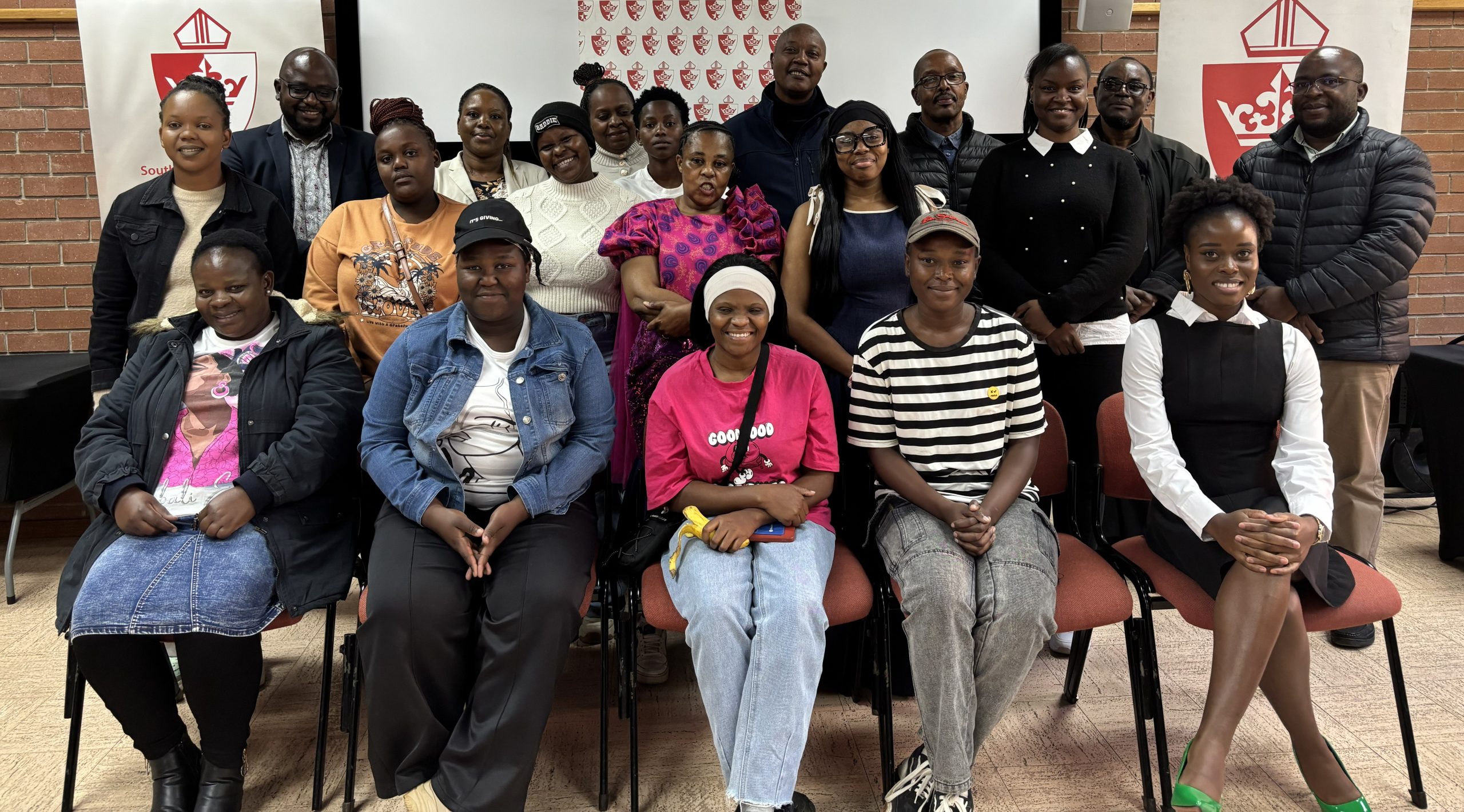
Representatives of the German Catholic development agency Misereor visited Khanya House, the headquarters of the Southern African Catholic Bishops’ Conference (SACBC), as part of a country visit from 17 May to 6 June to assess projects supported through its long-standing partnership with the SACBC Justice and Peace Commission and other Church departments.
During a meeting with the Justice and Peace Commission, delegates from the Young Women for Life Movement shared inspiring testimonies of how young women are responding to some of South Africa’s most pressing social challenges, including gender-based violence, domestic violence, HIV/AIDS, teenage pregnancy, substance abuse, unemployment, and food insecurity.
The movement, initiated and supported by the SACBC Justice and Peace Commission, brings together young women from different Christian denominations, empowering them to become leaders and agents of change in their communities. Representatives from Pietermaritzburg, Mpumalanga, and Mamelodi presented reports highlighting the impact of their work at the grassroots level.
Speaking on behalf of the KwaZulu-Natal branch, Mvelo Kubheka described how young women are using permaculture and organic farming to promote food security while creating opportunities for economic empowerment. Through community gardens ranging from small household plots to larger farming projects, participants provide nutritious food to vulnerable families and generate income to sustain their initiatives.
The farming projects have become an important source of livelihood for many participants. During community market days, some young women farmers earn between R5,000 and R8,000, enabling them to support their families and build sustainable futures.
“We are empowering young women to become future farmers and entrepreneurs,” she explained. “Our priority is to ensure that families have access to healthy food while creating opportunities for economic development.”
Nobuhle Kubheka, the provincial coordinator, reflected on the movement’s journey since 2018. Working closely with the SACBC Justice and Peace Commission, members helped track and support thousands of people living with HIV/AIDS, encouraging them to return to treatment programmes. During the COVID-19 pandemic, they assisted communities through awareness campaigns, the distribution of protective equipment, and vaccination mobilisation.
She also described innovative programmes aimed at addressing gender-based violence, including dialogue sessions with men in local taverns. The initiative revealed the deep social and economic pressures many men face, creating spaces for healing, counselling, and referrals to professional support services.
The Mamelodi ambassadors highlighted the movement’s role in accompanying survivors of gender-based violence and seeking justice for victims. In one notable case, the movement supported a young girl who had been assaulted while on her way to school. Through advocacy and community mobilisation, the perpetrators were identified, arrested, prosecuted, and sentenced.
Today, the young woman has completed her matric examinations with distinctions and is studying science in her second year at university.
Some of the ambassadors shared that they themselves are survivors of gender-based violence. Drawing from their own experiences, they now mentor and accompany other young women facing similar challenges. Their work extends beyond advocacy, focusing on economic empowerment, skills development, and leadership formation.
In Mamelodi alone, more than 8,000 young women have been empowered through the movement’s programmes, many of whom have gained practical skills, established small enterprises, and become breadwinners for their families.
The testimonies left a strong impression on the Misereor delegation.
Jenny Mushagira, Misereor’s Desk Officer for South Africa, said hearing the stories directly from beneficiaries gave life to the reports she normally receives in Germany.
“I only see the written proposals,” she said. “To hear the stories behind them and to witness the impact being made in communities has been truly moving.”
Meanwhile, Misereor’s Regional Representative for Southern Africa praised the courage and leadership shown by the young women.
“They refuse to see themselves as victims,” he said. “Instead, they have become agents of their own destiny, changing the trajectory of issues such as gender-based violence and bringing hope to their communities.”
Encouraging the young women to continue their mission, Mushagira reminded them that they possess the strength needed to shape their future.
“Stay strong and stay committed,” she said. “We are proud of the partnership we share with the Justice and Peace Commission and remain committed to supporting this important work.”
The Misereor delegation also expressed gratitude to the SACBC for facilitating the encounter, describing it as a powerful witness to the Church’s commitment to human dignity, solidarity, and the empowerment of young people.
0 Comments