
The World Council of Churches (WCC) Central Committee convened in Johannesburg, South Africa, from 18 to 24 June 2025, under the South African Council of Churches (SACC) hospitality.
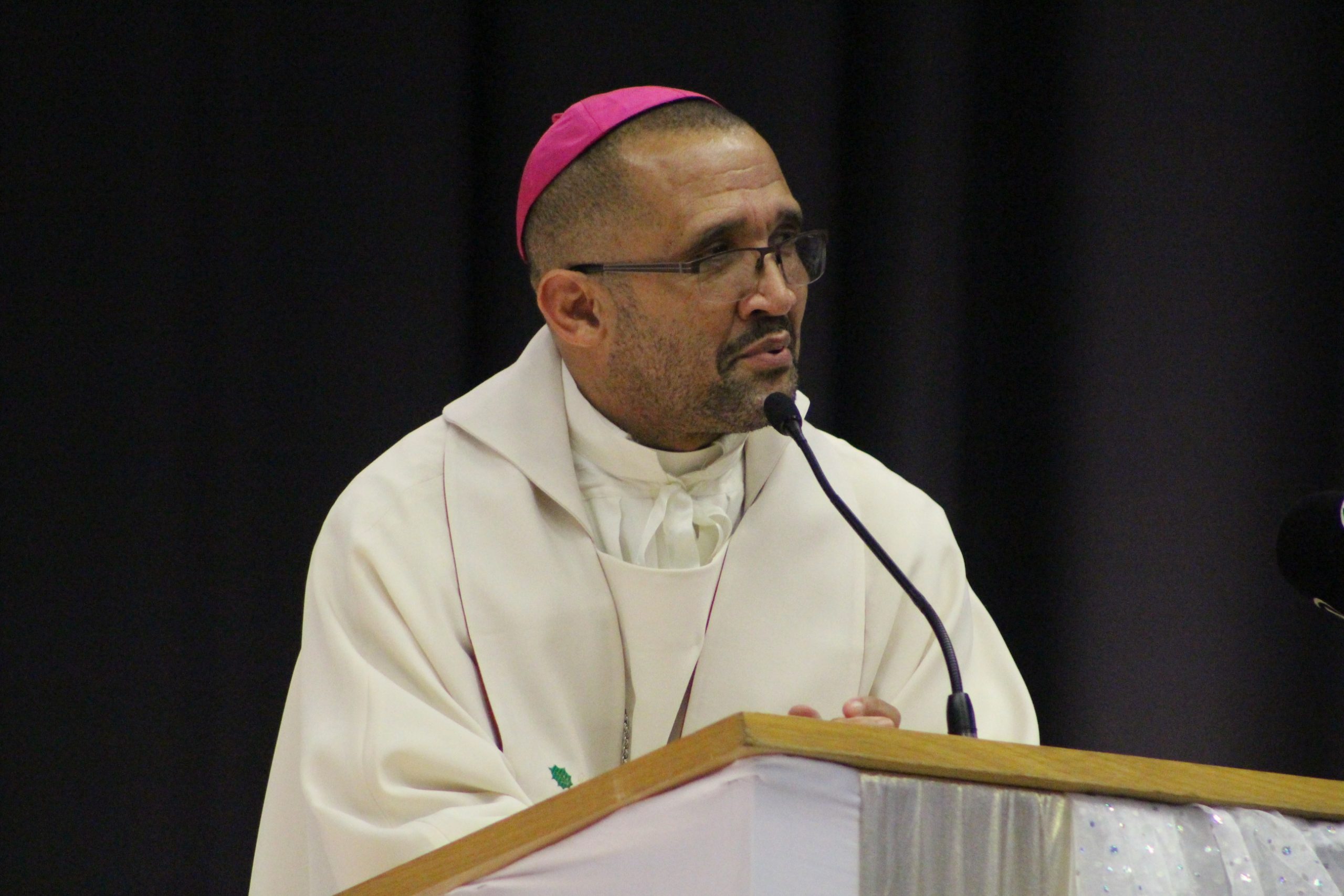
Opening the week-long gathering with a homily both theological and urgent, SACC President Bishop Sithembele Anton Sipuka reminded global delegates that the Church is not merely an observer of suffering, but a called and committed responder.
“Your gathering here symbolises hope,” he proclaimed, “hope that the Church can still act as a bridge-builder, a voice for the voiceless, and a bearer of Christ’s good news to a world in desperate need.”
A Moment of Global Significance
Meeting at the Birchwood Hotel in Johannesburg, the WCC Central Committee brought together church leaders, theologians, and ecumenical partners from across the globe to reflect, pray, and act on the theme of a “pilgrimage of justice, reconciliation, and unity.”
Bishop Sipuka’s homily, grounded in Luke 4:16 -22, called for concrete action in the present moment, urging the global Church to embody Christ’s mission in the face of ongoing conflict, inequality, and marginalisation.
In his June 18 homily Bishop Sipuka reflected on both painful and redemptive historical anniversaries being marked in 2025: 140 years since the Berlin Conference that carved up Africa, 30 years since the Rwandan genocide, but also 100 years of the Life and Work movement, 40 years since the Kairos Document, and the enduring theological milestone—1,700 years since the Council of Nicaea.
The Humanity of Christ, the Dignity of All
Drawing from the Council of Nicaea’s affirmation of Christ’s full humanity and divinity, Bishop Sipuka reminded the assembly:
“If Christ has fully embraced our humanity… we too must honour the humanity of every person created in God’s image.”
Quoting Pope Francis’ third encyclical letter Fratelli Tutti (Fraternity And Social Friendship), Bishop Sipuka emphasized the moral imperative of this recognition:
“If we accept the great principle that there are rights born of our inalienable human dignity, we can rise to the challenge of envisaging a new humanity.”
This theological foundation, he argued, must shape the Church’s response to global suffering today—from homes plagued by gender-based violence to war zones filled with starving children and grieving families.
Naming the Cries of the Oppressed
In poignant detail, Bishop Sipuka named the ongoing suffering in various parts of the world. In South Africa, he noted the epidemic of gender-based violence and femicide:
“Every day, women and girls are murdered simply for being women. Their humanity is denied, their dignity trampled.”
Turning to global crises, he lamented the devastation in Gaza, Israel, Sudan, the DRC, and Ukraine—countries where civilians continue to pay the highest price for war and greed.
In one of the most moving moments of his homily, Bishop Sipuka described the image of a hungry child killed while queuing for food in Gaza:
“Babulawa bezokhongozela ukutya izisu zither nca emqolo,” he said in isiXhosa—“They are killed while in a desperate posture to receive food, with the skin of their stomach stuck to their back because of hunger.”
“When we see a child crying in Gaza or Israel, we witness the same tears and the same pain that connect us all as human beings,” he added.
A Church That Embodies the Gospel
Asking how the reading from Luke might speak to the poor and the oppressed today, Bishop Sipuka answered plainly:
“The answer lies in us gathering here. We represent churches from every corner of the globe… When we unite, we embody the truth that our unity in Christ is stronger than our divisions.”
He called for prophetic courage, not just consensus. “Let our statements arise not from compromise but from gospel conviction,” he urged.
The Church’s role, he said, must go beyond charity or theology; it must be incarnational:
“Just as Christ journeyed from divinity to humanity, we too must step beyond our comfort zones… into solidarity with those who suffer.”
A Pilgrimage of Justice and Reconciliation
Bishop Sipuka affirmed the WCC’s central committee theme—a pilgrimage of justice, reconciliation, and unity—as more than a slogan. It is a way of life, rooted in Christ’s own incarnation.
“For Christ, his humanity served the purpose of glorifying God and serving his fellow human beings,” he said. “But what we see is that for the most part, we use the skills and abilities of our humanity to give glory to ourselves and to destroy the humanity of others.”
He challenged participants to allow their deliberations to be shaped not by abstract theology, but by “the tangible realities of human suffering and hope.”
“Today This Scripture Is Fulfilled”
Concluding his homily, Bishop Sipuka called on delegates to fulfil Christ’s mission in the here and now:
“May the poor hear good news through our advocacy for economic justice. May the millions imprisoned by political systems find freedom through our work for human rights. May the blind receive sight through our dedication to truth. May the oppressed be liberated through our solidarity.”
Echoing Christ’s own words, he closed with a charge that reverberated through the Birchwood Hotel conference room and, perhaps, through the global Church:
“Today, in this place, through our commitment and presence, may this same scripture find fulfilment.”
0 Comments