
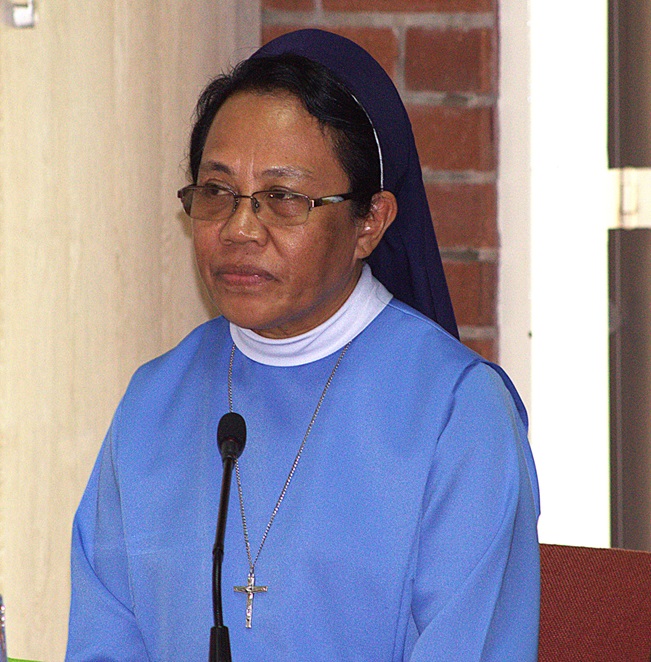
As the Church reflects on Pope Leo XIV’s first encyclical Magnifica Humanitas, the Associate Secretary of the Southern African Catholic Bishops’ Conference (SACBC) Department for Christian Formation, Liturgy and Culture, has emphasised the urgent need for the Church to remain a “humanising community” in a rapidly changing digital age.
In a pastoral theological reflection inspired by the encyclical, Sr. Inosensia Loghe Pati, SSpS explores how artificial intelligence and digital systems are reshaping human relationships, moral responsibility and social structures, while also presenting new challenges to human dignity and authentic communion.
Drawing from Magnifica Humanitas, as well as key Church documents such as Gaudium et Spes, Evangelii Gaudium, Laudato Si’, Fratelli Tutti, and Caritas in Veritate, Sr. Pati notes that the Church is called to reaffirm the primacy of the human person in a world increasingly shaped by technology.
“The Church must safeguard humanity from being reduced to data, functions or systems,” she explains, highlighting Pope Leo XIV’s warning against technological structures that undermine human dignity or weaken authentic human encounter.
At the centre of the reflection is the theological conviction that every human being is created in the image and likeness of God (imago Dei), a truth that gives each person an intrinsic and inalienable dignity. Referring to the Second Vatican Council’s teaching in Gaudium et Spes, Sr. Pati stresses that “the human person is the subject and the end of all social institutions.”
She further points to the Incarnation as the model of true humanisation. In Jesus Christ, God entered fully into human history, affirming the value and dignity of human life. The Church, as the Body of Christ, is therefore called to continue Christ’s mission by restoring dignity, promoting communion and accompanying people in their lived realities.
Addressing the rise of artificial intelligence, Sr. Pati acknowledges both the opportunities and dangers presented by modern technologies. While technology can serve humanity and foster development, she warns against what Pope Francis described as the “technocratic paradigm,” where efficiency and utility begin to dominate human relationships and moral decision-making.
“Does artificial intelligence help us become more human, or does it take away our humanity?” she asks, echoing one of the central concerns raised in Magnifica Humanitas.
According to Sr. Pati, the Church’s response must be rooted in encounter, dignity and responsibility.
In a fragmented digital culture, the Church is called to become a community of encounter where people are truly seen, heard and welcomed. Authentic relationships, dialogue and synodal listening are essential in overcoming isolation and dehumanisation.
The reflection also underlines the Church’s responsibility to defend the dignity of the poor and vulnerable, including those excluded or marginalised by digital systems and technological inequalities. Drawing on the African philosophy of Ubuntu — “I am because we are” — Sr. Pati emphasises the communal nature of human dignity and solidarity.
Furthermore, she stresses that ethical responsibility cannot be outsourced to machines. Conscience, moral discernment and accountability remain central to Christian life and social engagement.
In practical pastoral terms, Sr. Pati calls on the Church to move from programmes to personal accompaniment, fostering communities of belonging where people actively participate and share responsibility. She highlights the importance of Small Christian Communities, synodal dialogue and family life as key spaces for nurturing authentic human relationships.
“The Church is called ‘to be’ and not only ‘to do’,” she notes, insisting that pastoral ministry must remain grounded in presence, compassion and communion.
The reflection concludes by affirming that the mission of the Church in the age of artificial intelligence is ultimately the mission of Christ himself: to reveal, restore and fulfil what it means to be truly human.
0 Comments