
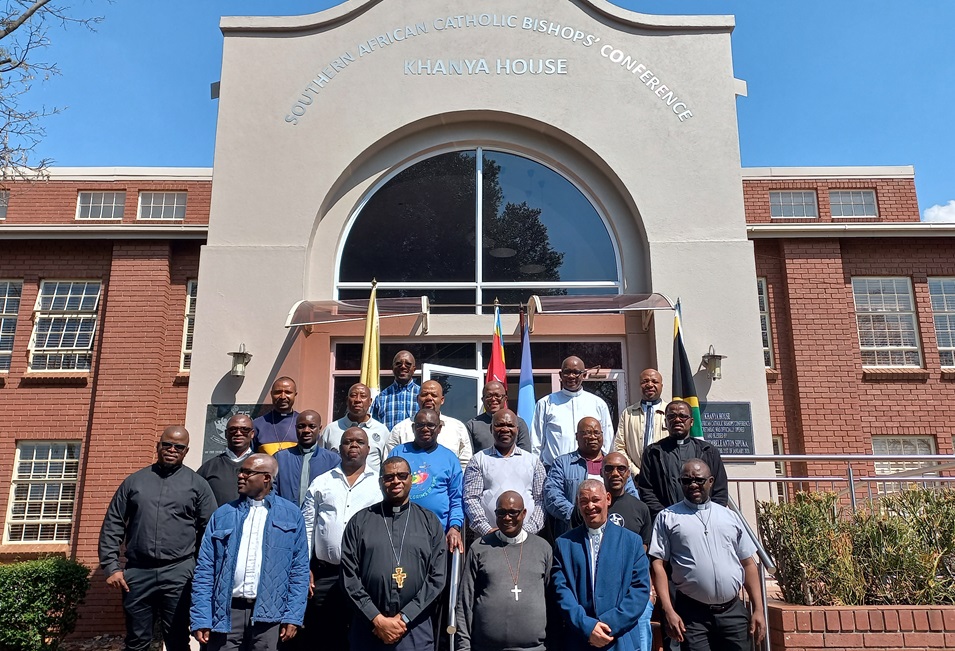
Three-day meeting focused on priestly communion, stewardship, vocations and a more synodal Church
The first strategic planning meeting of the Southern African Catholic Bishops’ Conference (SACBC) newly established Council of Priests (COP) brought priests from across Southern Africa together at Khanya House on 09–11 September to establish priorities for the period 2026–2029.
Held under the theme ‘Strengthening Priestly Communion, Stewardship, and Mission for a Sustainable Church’, the meeting focused on strengthening collaboration between bishops and priests and addressing key challenges affecting priestly life and ministry.
Strengthening priestly communion
Fr Alex Beukes, Vice-Chairperson of COP, said the new structure responds to the need for closer collaboration between bishops and priests. Unlike the former Southern African Council of Priests (SACOP), which was driven by priests, COP was established by the bishops as a collaborative and synodal body through which priests can share their experiences and concerns.
Representatives from dioceses and archdioceses across South Africa and Eswatini participated, bringing together different experiences of diocesan, religious and missionary priesthood. Fr Beukes described the broad representation as an opportunity to address issues affecting priests and to strengthen their common identity and communion.
Addressing key challenges
The strategic priorities included financial stewardship, vocations, ongoing formation, the changing face of the local Church, synodality, and the development of a national clergy database.
Discussions on financial management highlighted budgeting, saving, retirement planning and long-term investment, while also considering the financial sustainability of parishes and dioceses. Participants stressed the need for a broader conversation among bishops, priests and parishioners about responsible stewardship.
The meeting also examined the vocation crisis, including the role of families and small Christian communities, the use of social media in vocation promotion and the need to discern the kind of priest needed by the Church today.
The proposed national clergy database was discussed as a means of improving access to accurate information about priests, with further consideration of the proposal expected before the bishops’ November Board meeting and January 2027 plenary session.
Putting synodality into practice
Synodality featured prominently throughout the meeting, with participants reflecting on how synodality can move from discussion to concrete implementation in dioceses and parishes.
The representation of diocesan priest council chairpersons on COP was seen as an important link for taking the synodal process back to priests at diocesan level.
Participants also reflected on the need for a listening Church that moves beyond clericalism and creates greater space for the participation of parish councils, associations and the wider faithful.
Mental health and priestly wellbeing
The second day focused on mental health and self-care. Dr Michelle Daniels addressed the importance of mental health in South Africa and its implications for priests and pastoral ministry.
The discussion included burnout, compassion fatigue and the pressures faced by priests, as well as the need to strengthen support among clergy. Participants proposed greater dialogue among priests and reflected on the possibility of reviving priest-to-priest ministry, which had previously existed within the SACBC.
The meeting concluded with a commitment to take the discussions and priorities back to the dioceses, strengthening priestly communion, collaboration and a more synodal approach to the life and mission of the Church.
0 Comments