
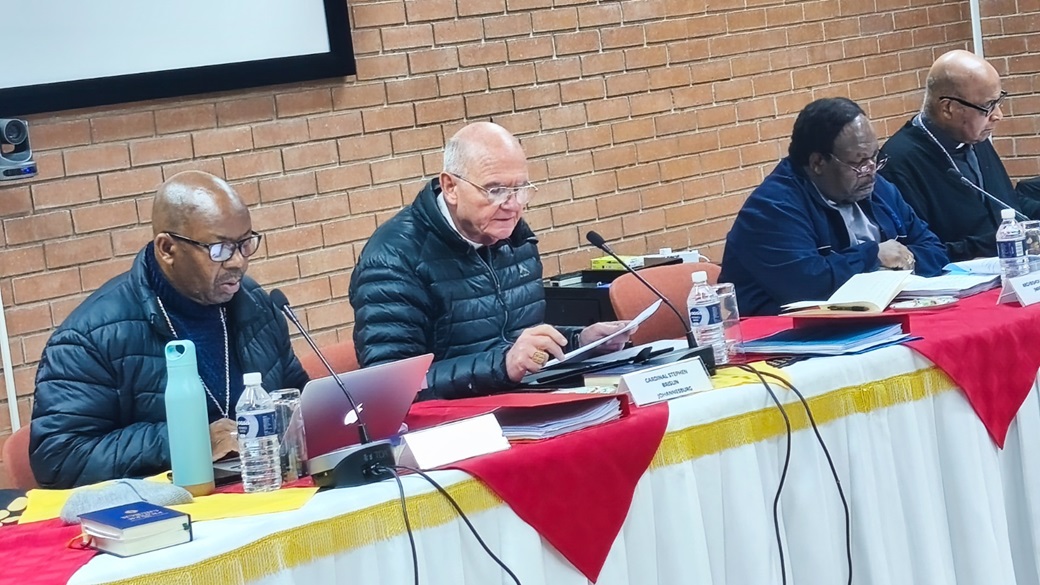
The members of the Southern African Catholic Bishops Conference (SACBC) have called on South Africans to use the forthcoming 2026 Local Government Elections as an opportunity to renew the spirit of the common good, urging citizens to vote, hold leaders accountable, and take greater responsibility for the well-being of their communities.
The appeal comes in a Pastoral Letter on the 2026 Municipal Elections, signed by SACBC President Cardinal Stephen Brislin, at the conclusion of the bishops’ August plenary session in Pretoria. The letter places the 4 November elections within the wider context of Catholic social teaching and the Church’s concern for the dignity of every person and the wellbeing of society.
Quoting Pope Francis’ Evangelii Gaudium, the bishops recall that “politics, though often denigrated, remains a lofty vocation and one of the highest forms of charity” when it seeks the common good.
The bishops express gratitude for South Africa’s democratic system but acknowledge the serious challenges confronting municipalities, particularly the crisis of service delivery. Communities across the country continue to experience “water shortages,” uncollected waste, poorly maintained roads and inadequate recreational facilities for young people.
The pastoral letter identifies a range of factors contributing to the deterioration of local government, including nepotism and corruption, the capture of municipalities by organised crime, instability within coalition governments, “cadre deployment,” a lack of professionalism in the public service and the politicisation of ward committees intended to promote accountability.
At the same time, the bishops caution against placing responsibility solely on political leaders and institutions.
“We must also be honest about our own role as citizens,” they say, pointing to practices such as non-payment for municipal services, bribery, illegal electricity connections, unlawful occupation of land, vandalism, illegal dumping and violent crime.
For the bishops, these realities reveal a deeper weakening of the spirit of the common good and ubuntu – a tendency to place individual or partisan interests above the wellbeing of the wider community.
Against this backdrop, the bishops make a particular appeal to young people to become active participants in shaping the country’s future. They urge every citizen to vote and stress that “nobody should remain at home”.
The appeal builds on a series of civic participation initiatives undertaken by the SACBC Justice and Peace Commission in partnership with Citizens ZA and the Independent Electoral Commission (IEC). In July, Catholic tertiary students and young people from six deaneries of the Archdiocese of Johannesburg participated in civic education programmes designed to encourage informed voting, responsible citizenship and ethical leadership.
During one of the initiatives, Cardinal Brislin challenged young people to see participation not simply as an electoral obligation but as a responsibility for society’s future. He urged voters to exercise their conscience carefully, considering leaders who demonstrate honesty, integrity and a genuine commitment to serving the poor, unemployed and vulnerable.
The bishops’ pastoral letter reinforces this message, while stressing that voting alone is not sufficient.
“Casting our vote must go hand in hand with our willingness to work for the common good—both within political parties and in our everyday lives as citizens,” they write.
Drawing on the Book of Deuteronomy, the bishops frame participation in public life as a choice for life: “I have set before you life and death, blessing and cursing: therefore choose life.”
Choosing life means electing leaders committed to serving their communities honestly; respecting public property and rejecting vandalism and lawlessness; supporting officials who resist corruption and nepotism; encouraging political parties to cooperate for the common good, particularly in coalition governments; and ensuring that ward committees genuinely serve communities rather than partisan interests.
The bishops also call on political parties, independent candidates, the media, civil society and state institutions to act responsibly in the electoral process. They appeal for elections that are peaceful, free and fair, with every citizen able to vote without fear and with election results accepted in a spirit of peace and responsibility.
The letter concludes with a prayer entrusting South Africa and the elections to God, asking the Lord to guide the country’s leaders, strengthen communities and inspire citizens “to act with wisdom and courage.”
0 Comments