
The Church in Southern Africa must move beyond reluctance and engage more deeply with African cultures and lived experiences if inculturation is to take root, says Father Ian Mberikwazwo Chitambo OMI, a Zimbabwean theologian and lecturer at St Joseph’s Theological Institute in South Africa.
Speaking to the Southern African Catholic Bishops’ Conference (SACBC) Communications Office during a regional workshop organised by the Inter-Regional Meeting of the Bishops of Southern Africa (IMBISA), Fr Chitambo said inculturation is possible but requires greater collaboration, resources and the participation of the wider Church.
“We need to speak with one voice. We need to come together, and we have to stop being reluctant to engage the question,” he said.
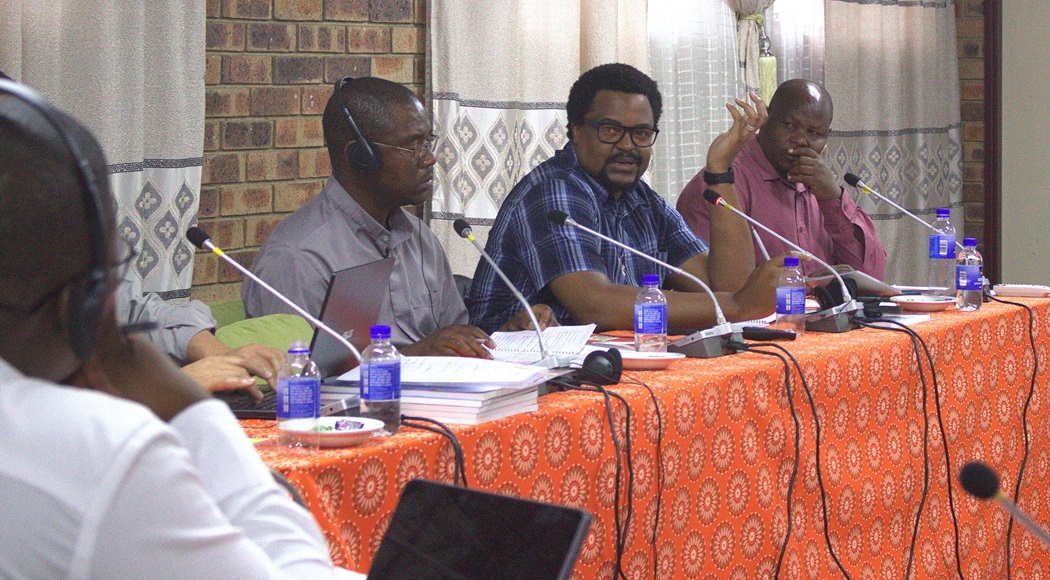
Fr Chitambo, who is also a member of the SACBC Theological Advisory Committee (TAC), was among the experts invited to lead sessions at the IMBISA workshop on inculturation, held from 2 to 6 November at the Padre Pio Spirituality Centre in Pretoria. The gathering took place under the theme ‘Embracing inculturation, traditional beliefs, and synodality for a liberating Church in IMBISA’.
Drawing on his research into the work of the late Oblate theologian Father Stuart Bate, Fr Chitambo explored the historical development of inculturation in Southern Africa and challenged participants to consider how the Church can respond more meaningfully to the African condition.
He emphasised that the process must involve not only theologians and Church leaders but also lay faithful, including young people, whose cultural experiences are equally important. “We cannot go forward before asking where we are coming from,” he said, highlighting the need to understand the Church’s history, the obstacles that have hindered inculturation and how these can be overcome.
Engaging African experiences
Reflecting on the relationship between African traditional beliefs and Catholic faith, Fr Chitambo acknowledged that questions surrounding traditional healers, ancestral practices and herbal medicine require careful pastoral consideration.
Drawing on his involvement in the SACBC’s theological discussions, he said the bishops’ conference was undertaking research into these questions, with the hope of concluding the process before the end of the year. The findings are expected to inform further guidance on how the Church understands and approaches these practices.
In the meantime, he encouraged pastoral agents to accompany people rather than exclude them because of their cultural or spiritual practices. “If you have such a member in your fold, listen to them. Do not have that attitude of saying, ‘You do not belong.’ Listen to their story, journey with them,” he said.
He added that catechesis and accompaniment are important in helping individuals discern their faith journey and make informed decisions.
One of the central lessons emerging from the IMBISA discussions, he said, is that the Church cannot approach complex cultural realities with simplistic answers. “We should not have monocausal solutions to complex phenomena,” he said, calling for greater engagement with communities and their lived experiences.
“We need to be on the ground, go to the peripheries and listen to the people of God, experience with them their lived experience and come to a collaboration.”
Synodality as a way forward
Fr Chitambo identified synodality as an important framework for advancing inculturation, providing a space for dialogue and perspectives that may previously have been overlooked.
He said the synodal process offers the Church an opportunity to discern together and find ways forward that respect the experiences of local communities.
“This is how synodality is helping us to think about inculturation, helping us to listen to voices that had not been listened to, and also helping us to find a way forward. So it is a conversation in the Spirit,” he said.
His reflections were particularly relevant to the workshop’s discussions on polygamy and African traditional beliefs, which brought together theologians and pastoral representatives from Angola, Lesotho, South Africa and Zimbabwe.
Participants examined the pastoral challenges facing families in polygamous situations, including the risk of excluding women and children from the sacramental life of the Church.
Fr Chitambo encouraged IMBISA to build on the workshop by widening participation and taking the discussions into individual countries. “Broaden the horizon, include as many people as possible in such discussions,” he said.
He also proposed moving beyond regional gatherings to meetings within individual countries, where participants could engage more closely with communities and understand their particular circumstances. “If you meet people in their context, in their place, you understand their experience more, because you have more time and you have more people to engage with,” he said.
The workshop concluded with participants expressing their intention to work towards a joint publication to assist pastoral workers in reflecting on inculturation and accompanying families living in polygamous situations.
For Fr Chitambo, the challenge ahead is to translate these discussions into a more inclusive Church, prepared to engage African realities honestly while respecting the diversity of local communities.
0 Comments