
The farewell of Reabetswe Tloubatla at Khanya House in Pretoria became more than a moment of goodbye. It was a celebration of dedicated service, the enduring legacy of the late Johan Viljoen, and the mission of the Dennis Hurley Peace Institute (DHPI), which continues to accompany communities affected by conflict, injustice and forced displacement across Africa.
After nearly six years with the institute, Tloubatla leaves her role as Programme Manager and Administrator carrying memories shaped by international collaboration, advocacy for human dignity and, above all, the mentorship of the late Johan Viljoen, who directed the institute until his passing in May 2026.
“I will always remember Johan,” she reflected. “He went from being my boss to my mentor and a very dear friend.” Through his guidance, she said, she built lasting friendships with partners across Africa, Europe and beyond, united by a shared commitment to defending the dignity and rights of the most vulnerable.
Founded by the Southern African Catholic Bishops’ Conference (SACBC) in 2005, the Dennis Hurley Peace Institute was established to continue the Church’s commitment to justice, embodied by Archbishop Denis Hurley during South Africa’s struggle against apartheid. As Johan Viljoen often explained, after the country’s democratic transition, bishops from across Africa sought the South African Church’s support in promoting peace, democracy and human rights. DHPI was created to answer that call, accompanying dioceses and Church organisations through advocacy, peacebuilding and organisational strengthening.
Today, the institute partners with Church structures in countries including Mozambique, Nigeria, the Democratic Republic of Congo, South Sudan and Eswatini, responding to local needs while strengthening the Church’s witness in areas affected by conflict and social injustice.
Among Tloubatla’s proudest achievements was coordinating DHPI’s international Summer School programme, developed in partnership with the University of Würzburg in Germany. The initiative brought master’s students in international social work into direct contact with the realities of migration and displacement.
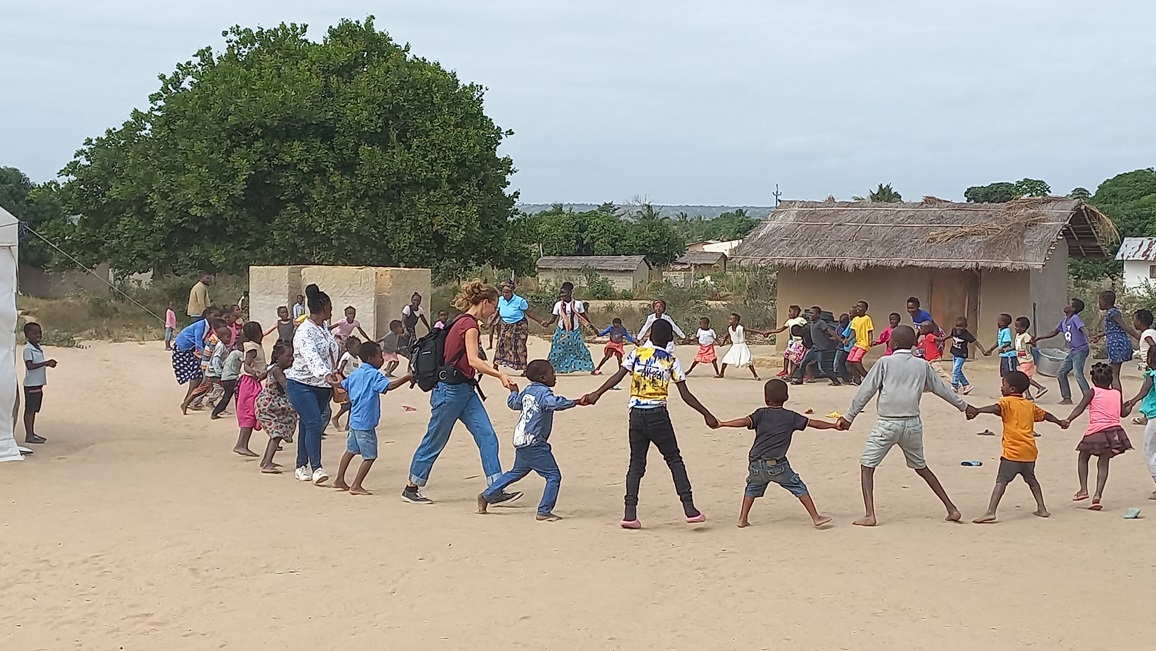
As Viljoen explained in interviews with the SACBC communication office, the programme was never simply an academic exercise. Students lived alongside refugee families in South Africa, visited communities affected by displacement in Mozambique, and later explored labour migration in the Philippines. He believed such experiences would help form future global leaders who could shape more humane migration policies and responses.
For Tloubatla, these exchanges became powerful moments of learning and solidarity. She also highlighted DHPI’s collaboration with Caritas Internationalis during the Jubilee campaign to address unjust global debt, as well as a conference in Ghana examining the exploitation of Africa’s mineral resources and their links to conflict and inequality.
Looking back, she said the greatest lesson she carries with her is that the Church’s mission to defend human dignity is never complete.
“There are always people we can help,” she said. “Human rights and people’s dignity continue to be trampled in many ways. Wherever we are, we must always do the best we can for the person next to us.”
Having served the Church since 2013, Tloubatla expressed gratitude to colleagues and collaborators who accompanied her journey, remembering especially the support they offered Johan Viljoen during his final months.
As DHPI continues the work entrusted to it more than two decades ago, the institute’s mission remains rooted in the same conviction that inspired both Archbishop Denis Hurley and the SACBC: that peace is built by standing with those on the margins, defending human dignity, and forming future generations to become faithful servants of justice and reconciliation.
0 Comments