
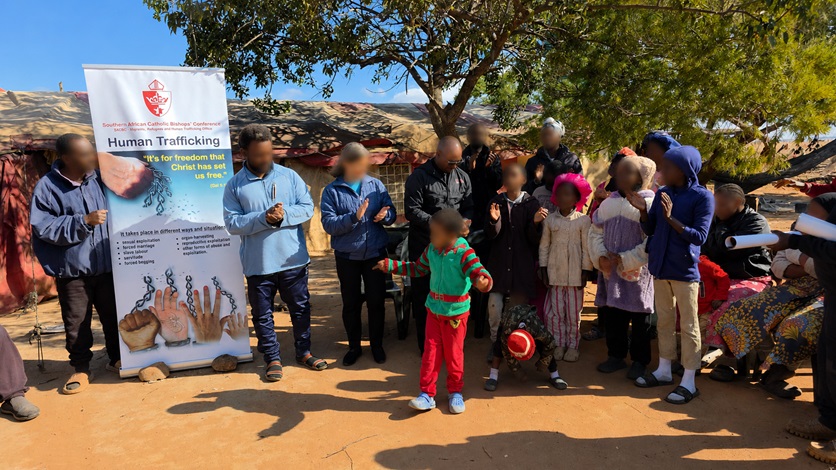
Children have been among those most affected by South Africa’s recent anti-undocumented migrant protests, with some forced to leave the country and begin their education and lives again elsewhere, says the Liaison Bishop for the Department for Migrants, Refugees, and Human Trafficking of the Southern African Catholic Bishops’ Conference (SACBC).
Speaking after the annual meeting of diocesan coordinators for migrants, refugees and human trafficking in Pretoria, Bishop Joseph Mary Kizito recalled his visit to the repatriation centre in Musina, where he saw children preparing to return to their countries of origin.
“I was asking myself, what education are they now going to start with in Malawi? Where are they going to start?” said Bishop Kizito.
Many of the children had lived in South Africa for years and attended local schools in English. Returning home could mean adapting to a different education system and learning new languages. Their religious lives were also disrupted, as they had to begin again in new communities and parishes.
Families separated
The annual meeting brought together 44 delegates from 18 dioceses across South Africa, Botswana and Eswatini. Sr Neide Lamperti, Coordinator of the SACBC Department for Migrants, Refugees and Human Trafficking, said diocesan reports highlighted families separated by the unrest and children who had missed school.
Some dioceses were raising funds for uniforms and shoes to help children return to school, while continuing to respond to families whose lives had been disrupted.
The protests and repatriations also disrupted livelihoods and left families returning to countries including Malawi, Zimbabwe and Lesotho without adequate preparation or resources, Bishop Kizito said.
Court protects access to asylum process
Meanwhile, on 28 September, the Department of Home Affairs directed all Refugee Reception Offices to immediately accept asylum applications from people seeking protection. The directive followed a 7 July Constitutional Court ruling declaring parts of the Refugees Act unconstitutional in a case brought by the Scalabrini Centre of Cape Town, which held that certain administrative requirements could prevent asylum seekers, including children, from accessing protection.
0 Comments