
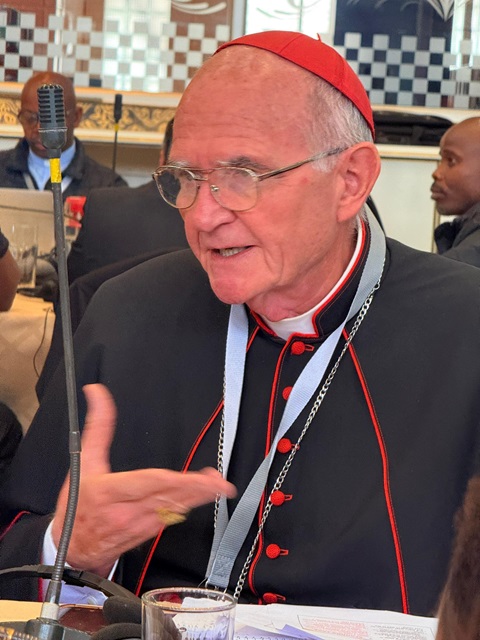
The Church must do more to accompany married couples and families beyond marriage preparation, particularly during the first years of marriage. This was among the key reflections shared by Cardinal Stephen Brislin following a seven-day meeting of presidents of bishops’ conferences from around the world, convened by Pope Leo XIV in the Vatican to mark the tenth anniversary of Pope Francis’ apostolic exhortation on ‘Love in the Family’, Amoris Laetitia.
In a conversation with the Southern African Catholic Bishops’ Conference (SACBC) Communication Office, Cardinal Brislin said the anniversary provided an opportunity to revisit the importance of marriage and family life in the Church’s mission. The discussions followed a synodal approach of prayer, silence, listening, and sharing.
“Family is just so important, and marriage is so important that we need to be able to discuss this and to see what support the Church should be giving to married couples and to families,” he said.
The SACBC President explained that the meeting was not intended to revisit controversial aspects of the exhortation, but to focus on its broader message about marriage as a gift from God and the beauty of family life. Participants shared experiences from their respective countries and cultures, with the Cardinal noting how similar the challenges facing couples and families were across the world.
Economic pressures emerged as one of the common difficulties, particularly for young couples starting married life and raising children.
Supporting couples beyond the wedding day
A key concern was the need for continued support after the wedding. Cardinal Brislin observed that while couples are expected to attend marriage preparation courses before receiving the sacrament, they are often left to manage the demands of married life without adequate support.
Particular attention was given to the first five years of marriage. He suggested that parishes develop practical mechanisms through which couples experiencing difficulties or uncertainty could find guidance and someone to turn to.
The meeting also considered the possibility of developing a marriage catechism. Cardinal Brislin welcomed the idea, explaining that marriage preparation should begin well before a couple decides to marry. He referred to the Church’s approach of remote, proximate and immediate preparation, through which young people can gradually learn about the meaning, purpose and commitment of marriage.
Accompanying families in different circumstances
The discussions also addressed the Church’s pastoral response to people in different family situations, including cohabiting couples, same-sex couples, women who wish to have children without marrying, and people in polygamous relationships.
Cardinal Brislin said the Church must offer support, advice and accompaniment without excluding anyone, while remaining clear about its understanding of marriage as a sacrament.
He also explained the Church’s process for examining the validity of marriages when couples divorce. Marriage tribunals consider whether essential conditions were present, including freely given consent, fidelity, and a lifelong commitment.
Those who have divorced and entered a new civil marriage without an annulment, he said, remain part of the Church community, even where their circumstances affect their reception of the Eucharist. They should not be excluded from the community or subjected to stigma.
“Because we are not the ones who are to judge people. You know, God is our judge. We are not the judge,” he said.
A Church that journeys with families
Reflecting on the meeting, Cardinal Brislin highlighted the contribution of Church movements in supporting people in their marriages. He also called for parishes to become communities in which members genuinely care for one another.
“The more we can support each other, the more we can journey together without judging people or condemning people,” he said.
In his message at the conclusion of the anniversary meeting, Pope Leo XIV thanked the participants for their work and encouraged them to share the fruits of their discussions with their episcopal conferences and dioceses. He called for the continued proclamation of the Gospel with families, inspired by Amoris Laetitia, and expressed the hope that families would remain active participants in the life and mission of local Churches.
For Cardinal Brislin, this commitment to mutual care and accompaniment is essential to the Church’s identity and mission. As he concluded, it is through such a sense of community that “the more authentic Church, the Church that Jesus Christ wants us to be” will become visible.
0 Comments