
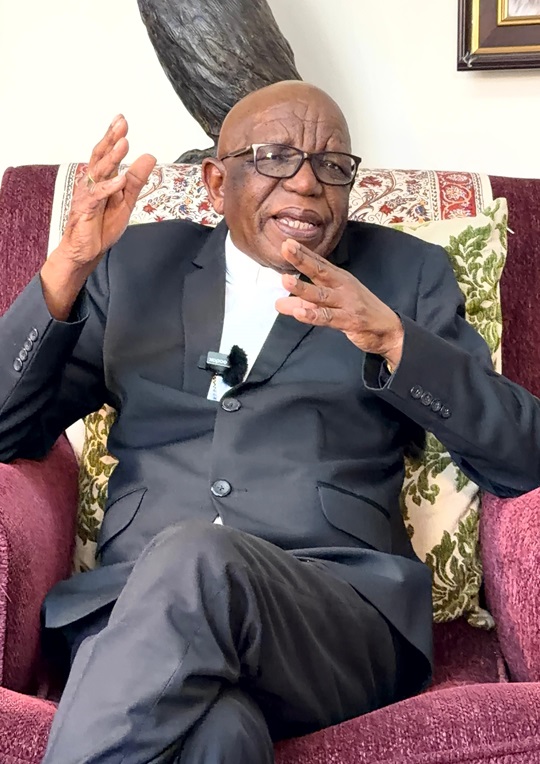
As South Africa prepares for planned anti-migrant demonstrations on 30 June, Archbishop Emeritus Buti Joseph Tlhagale OMI has appealed to South Africans to reject anti migrants’ sentiments and remember the solidarity shown by African nations during the struggle against apartheid, warning that hostility towards foreign nationals risks eroding the country’s moral witness and relationships across the continent.
The planned protests, organised by groups calling for stricter action against undocumented migrants, have heightened anxiety among migrant communities across South Africa. Reports indicate that several African governments, including Malawi, Nigeria, Ghana, and Mozambique have been assisting citizens wishing to return home amid fears of possible violence, while South African authorities have announced increased security measures ahead of the demonstrations.
Reflecting on these developments during the final part of a three-part interview marking the 50th anniversary of the Soweto Uprising, Archbishop Tlhagale said South Africans should never forget the support they received from neighbouring countries and the international community during the apartheid years.
“It is sad,” he said, referring to the growing hostility directed at foreign nationals. “Other people in these countries who used to love and support South Africa during the apartheid struggle now feel disappointed that a country they supported has turned against them.”
Archbishop Tlhagale warned that such attitudes risk undoing decades of friendship built during the liberation struggle.
“We are telling the world that we are ungrateful for what the world did during the apartheid years,” he said.
While acknowledging that many young South Africans did not personally experience apartheid or exile, he insisted that this history should be taught so that future generations understand the importance of welcoming those seeking refuge and opportunity.
“They should be taught the right thing,” Archbishop Tlhagale said. “To welcome people, so that tomorrow Africa should have a strong sense of solidarity, where we trade with each other and accept one another as people who share this continent.”
A global challenge
The Archbishop Emeritus of Johannesburg Archdiocese recognised that migration has become one of the defining challenges facing countries across the world. People leave their homes because of conflict, poverty, unemployment or the search for better opportunities, he noted, and governments have the responsibility to regulate migration in a manner that respects human dignity.
He cautioned against blaming migrants for South Africa’s economic difficulties.
“There are lots of resources that can be used to support everyone,” he said, arguing that corruption, poor governance and the unequal distribution of wealth are among the deeper causes of poverty and unemployment.
“If we promoted economic growth and used our resources properly, more people would have opportunities to work and live with dignity.”
A call to the Church
Archbishop Tlhagale also challenged the Church to move beyond statements by creating spaces where local communities and foreign nationals can encounter one another through dialogue.
“I would have wished that we had created platforms where local people and foreign nationals could meet regularly to discuss these challenges and find our way forward,” he said.
“There’s no point in writing about these problems without actually discussing them together.”
Drawing on the experience of the Synod on Synodality, in which migration emerged as one of the pastoral priorities facing the universal Church, Archbishop Tlhagale stressed that dialogue remains the most effective path to overcoming fear and misunderstanding.
He suggested that parishes and dioceses, particularly in cities such as Johannesburg where many migrants have settled, could play a vital role in fostering mutual understanding and building stronger communities.
Welcoming the stranger
Archbishop Tlhagale’s appeal echoes the Catholic Church’s consistent teaching on the dignity of migrants and refugees.
Throughout his pontificate, the late Pope Francis repeatedly reminded Christians that migrants are not a problem to be solved but brothers and sisters to be welcomed, protected, promoted and integrated. Pope Leo XIV has likewise continued to call for societies to uphold the dignity of every human person while working towards just and humane responses to migration.
As South Africa commemorates fifty years since the Soweto Uprising—a struggle that depended on the generosity of many African nations—Archbishop Tlhagale believes the country has an opportunity to respond not with fear or division, but with gratitude and solidarity.
“We should share this Africa together,” he said, “and not reject one another when we move about.”
0 Comments