
“We are only asking for protection.”
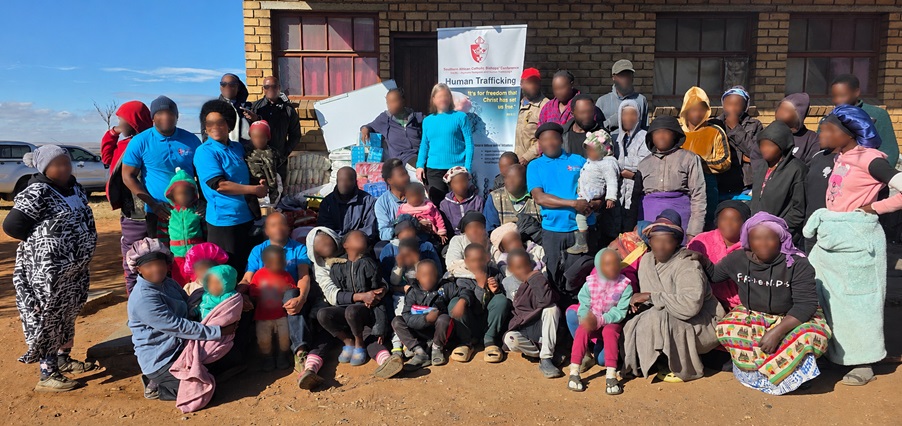
Those words, spoken by a 16-year-old refugee who has spent nearly half her life without a home, school or certainty about tomorrow, capture the desperation of dozens of refugees living in an abandoned settlement in Pretoria east.
As South Africa marks 30 June 2026, the date some anti-migrant movements had set as a deadline for undocumented foreign nationals to leave the country, fear has deepened among refugee communities—many of whom say they are being targeted simply because they are foreigners, whether documented or undocumented.
The anxiety has intensified as reports emerge from parts of Gauteng of anti-migrant protests turning violent. In some areas, street vendors have been looted, with protestors taking goods from traders. In other parts of the Johannesburg central business district, stones and other objects have reportedly been thrown at buildings housing mainly foreign nationals. Elsewhere, marches have remained peaceful. Yet despite repeated appeals from law enforcement that protests should remain peaceful and that no one should carry sticks, branches or traditional arms, many protestors have been seen carrying such items, while police officials appear not to be intervening.
Speaking to the Southern African Catholic Bishops’ Conference (SACBC) Communication Office during a visit marking World Refugee Day, several refugees said they had already received threats from members of the surrounding community.
“They came here three times,” one refugee recalled. “They told us we must leave South Africa. Even after we reported it to the police, they kept coming.”
Another added, “They don’t ask whether you are documented or not. Once they know you are a foreigner, they don’t want to hear anything.”
The refugees say they have reported the threats to the police, the UN Refugee Agency (UNHCR) and human rights organisations, but fear little protection will be available should violence erupt.
“We are thinking that maybe on that day we will have to hide in the bush just to save ourselves,” one man said quietly.
The community, made up mainly of refugees from the Democratic Republic of Congo and Burundi, has lived for several years in an abandoned building with no electricity, inadequate sanitation and limited access to clean water. Some families fetch water from a river contaminated by nearby mining activity because their water supply has been cut off.
“We drink the same water that the cattle drink,” one refugee explained. “We know it is dangerous, but we have no choice.”
The settlement is home to 53 people, including 28 children.
Many of the children have never attended school.
One teenager, born in South Africa but without documentation, told SACBC that she had managed to study only until Grade 3 before her education came to an abrupt end.
“I should be leading my younger brothers and sisters to school,” she said. “Instead, none of us goes to school. Every day is suffering.”
She was only nine years old when her family fled xenophobic violence and sought refuge at the offices of UNHCR. Years later, after periods spent in detention and temporary shelters, the family remains stranded.
“All we are asking for is protection—for our lives, for our education and for our future. We are children. We also dream about tomorrow.”
For many adults, the trauma stretches back decades.
One Congolese woman described fleeing war before finding temporary safety in South Africa in 2006.
“I never prayed to become a refugee,” she said through tears. “Nobody asks God to become a refugee. We all want to live peacefully in our own countries.”
She recounted how xenophobic violence, the loss of documentation and years of uncertainty eventually forced her children out of school.
“My children have not been in school for seven years,” she pleaded. “Please help our children.”
Another young mother shared a painful story of repeated sexual violence, displacement and exploitation before arriving in South Africa in search of her own mother. She now raises three children, each born out of traumatic circumstances.
“I only ask for protection,” she said. “My children deserve a future.”
During the World Refugee Day visit, the SACBC Office for Migrants and Refugees and Human Trafficking, together with the SACBC Bishops Foundation, delivered food parcels, blankets, clothing and children’s supplies.
For families who had gone months without meaningful assistance, the visit offered not only material support but also the reassurance that they had not been forgotten.
“It has been six months since we received food like this,” one refugee said. “Today we are grateful because God has remembered us.”
Yet Church representatives acknowledged that humanitarian aid alone cannot resolve the deeper crisis.
As one volunteer reminded the community during a prayer service, “God will never abandon you because every one of us is created in His image.”
The refugees, however, remain anxious about what lies ahead.
Several described strangers arriving at the settlement in recent weeks warning them to leave before 30 June. One family said their daughter had been confronted while walking near the settlement and told that all foreigners would be forced out.
Their fears come amid heightened public debate over immigration. While the South African government has repeatedly stated that immigration enforcement must take place within the framework of the law and has warned against vigilantism or unlawful action by private groups, calls by some anti-illegal immigration movements for mass removals have heightened anxiety among many migrant communities.
For the families living in this isolated settlement, the uncertainty is overwhelming.
“We have nowhere else to go,” the teenage refugee said.
“If we leave here, where will we go? Everywhere we go, people chase us away.
“We are only asking for protection.”
0 Comments