
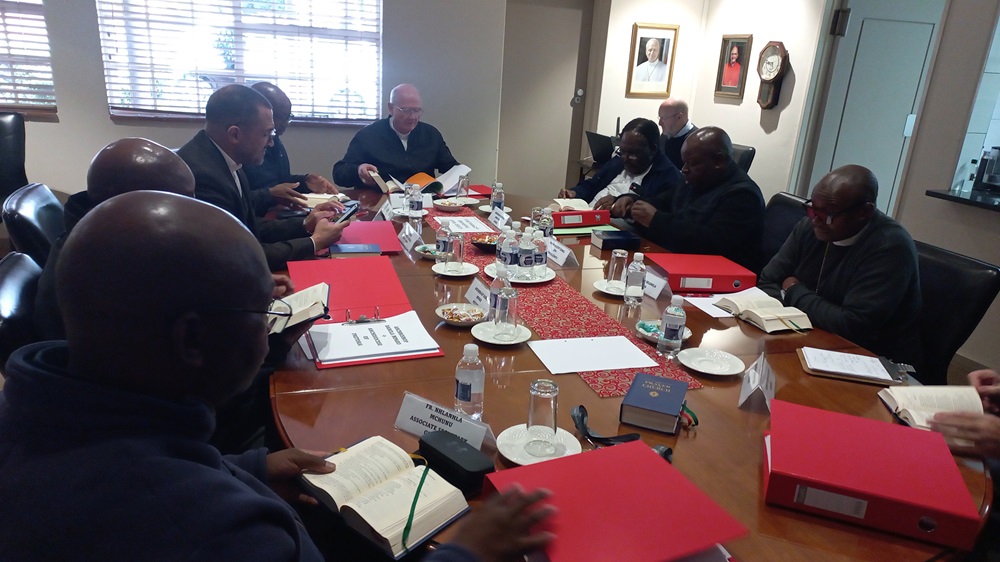
The Southern African Catholic Bishops’ Conference (SACBC) says the theological and pastoral research process on the question of ubungoma (traditional healing) is expected to be completed by January 2027, as the Theological Advisory Committee (TAC) continues to seek a careful and comprehensive response to questions raised by many Catholics.
In a video update after the SACBC May Board Meeting held at Khanya House in Pretoria, the First Vice President of the SACBC, Archbishop Zolile Peter Mpambani SCJ, explained that the gathering served as a preparatory meeting ahead of the August plenary session, where bishops reviewed reports from various departments and commissions of the Conference.
Among the major topics discussed was the ongoing work of the Theological Advisory Committee (TAC), which has been tasked with assisting the bishops in formulating theological, pastoral, and scriptural reflections on ubungoma and African traditional practices.
“The TAC today came to present their first presentation of what they are putting together,” Archbishop Mpambani said. “The committee has been given the duty of putting theological answers, pastoral points of view, and scriptural reflections to the questions being discussed as we prepare a concise answer to all Catholics who are waiting to hear what the bishops are saying about ubungoma.”
The Archbishop noted that the work is still at an early stage, with only “about one quarter” of the research completed so far. “We think that maybe by January we might have completed the whole thing,” he said, adding that the process requires careful discernment and thorough study.
The SACBC has repeatedly emphasised that the Church is not opposed to African culture but seeks clarity on practices that may conflict with Catholic faith and teaching. In November 2025, Archbishop Siegfried Mandla Jwara CMM stressed that the bishops are engaging the matter pastorally and theologically, while listening attentively to the experiences of the faithful. Similarly, Archbishop Emeritus Buti Joseph Tlhagale OMI and other Church leaders have previously called for a deeper understanding of African spirituality within the life of the Church.
The May Board Meeting also received reports from various SACBC departments, including clergy, finance, laity, and Christian formation. Attention was given to Marriage and Family Life initiatives linked to the upcoming anniversary of Pope Francis’ Apostolic Exhortation Amoris Laetitia. Archbishop Mpambani said the Department for the Laity had recently participated in an online meeting with Vatican officials and is preparing further guidance for diocesan marriage and family life offices across Southern Africa.
During the 5 to 6 May board meeting, the bishops also reflected on growing anti-migrant and anti-foreigner sentiments in South Africa. Archbishop Mpambani said the matter had been discussed during the meeting, though the bishops agreed not to rush into issuing a statement while tensions remain high.
“We decided that let us not be quick to respond while this whole potato is still hot because it might be misunderstood and misconstrued,” he explained. “There is sympathy with the foreigners, but this is going to be given in a statement that will soon be written.”
The SACBC has consistently called for solidarity, dialogue, and protection of migrants and refugees. During a recent IMBISA-SACBC webinar, participants urged a stronger prophetic voice against xenophobia and violence directed at foreign nationals. Likewise, Cardinal Stephen Brislin, in his Freedom Day message earlier this year, appealed for unity, gratitude, and solidarity among all who live in South Africa, warning against divisions that undermine human dignity and social cohesion.
0 Comments