
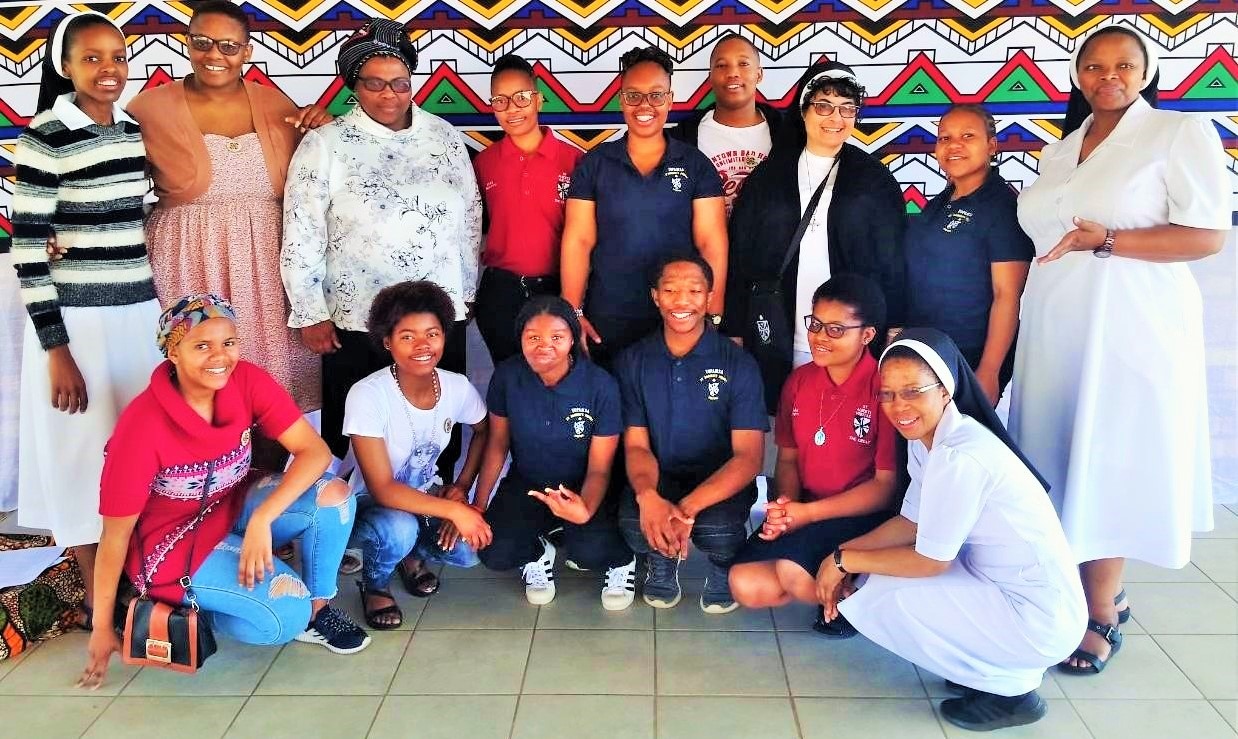
June is a significant time across the African continent—marking both Youth Month in South Africa and the day of the African Child on June 16. It is a period of remembrance, hope, and responsibility. In South Africa, June 16 commemorates the courageous Soweto Uprising of 1976, when black students rose against apartheid’s oppressive education system. Today, it remains a sobering reminder of the continued social and economic inequities faced by many young people—particularly the black child.
A recent youth dialogue hosted by the Southern African Catholic Bishops’ Conference (SACBC) communication office brought together Church leaders and youth voices from across the region. The panel included Bishop Siphiwo Paul Vanqa SAC, Liaison Bishop for Youth and Bishop of Queenstown Diocese; Dominique Yon, SACBC Youth Coordinator in Cape Town Archdiocese; Nomvuyo Nxumalo, a member of the SACBC Youth Executive from Manzini Diocese in Eswatini; and Anne Baker of the Catholic Institute of Education (CIE). Their wide-ranging conversation explored youth empowerment, Church engagement, and the lasting wounds of injustice.
The Struggles of the Black Child: Then and Now
Despite political freedoms gained since 1994, many black children in South Africa continue to face marginalisation. The quality of education remains deeply unequal, with under-resourced schools, overcrowded classrooms, and a lack of opportunities beyond matric. Violence, drug abuse, unemployment, and family instability compound these challenges.
Anne Baker stressed that education must extend beyond academics. “Catholic education should prepare young people for life, not just exams,” she said. She advocated for stronger skills development programs, especially for those who leave school early or cannot access tertiary education. “We must be bold in saying: university is not the only path to dignity.”
Youth Participation: Inclusion, Not Tokenism
In Eswatini, Nomvuyo Nxumalo described practical Church-led initiatives aimed at real transformation. The Diocese of Manzini hosts an annual “Skills Expo Day,” where youth showcase their talents and explore income-generating opportunities. “We are not waiting to be rescued. We’re finding ways to build our own future,” she shared.
However, she also called out the tokenism many youth experience in Church spaces: The idea that the Church has unlimited funds or will provide everything must be corrected, she added. Instead, the Church should focus on forming youth who are capable, ethical, and self-driven.
Dominique Yon echoed this frustration, noting that youth are often asked to assist only with technical tasks like running slides or fixing Wi-Fi at Church events. “That’s not meaningful involvement. Formation must teach initiative and responsibility, not dependence,” she said.
“Young people are tired of being told what to do. We want to be included in decisions. We want to lead,” she added.
The Role of the Church in Today’s World
Bishop Vanqa, drawing on his pastoral experiences in townships and Catholic schools, called for collective responsibility. “It takes the entire Church to form young people,” he said, noting that youth formation cannot be outsourced to priests or catechists alone. Parents, teachers, and the broader community must all contribute.
He challenged the Church to revive effective models of the past, such as Young Christian Students (YCS), which gave youth a sense of purpose, leadership, and social mission. Without structured programs, youth ministry often becomes personality-driven and unsustainable. “We need solid foundations, not just enthusiasm,” he stressed.
Catholic Education: Mission in Crisis?
Anne Baker expressed concern that Catholic education, once a vibrant mission of the Church, is fading. “Today, many dioceses struggle to maintain Catholic identity in schools. In some places, there are no longer any religious sisters or priests involved,” she said. Despite these limitations, Catholic schools and skills centres remain crucial, particularly for children from vulnerable backgrounds.
Catholic education, she insisted, must be reimagined to respond to current realities. It must offer life skills, faith formation, and critical thinking—tools that young people need to survive and thrive in today’s world.
A Shared Responsibility for the Future
This Youth Month, the SACBC dialogue serves as a clarion call: formation is not a luxury, it is a necessity. It must be holistic, empowering, and inclusive. Youth are not the future of the Church—they are its present.
“We cannot ask young people to lead tomorrow if we do not walk with them today,” said Bishop Vanqa. “They are searching for truth, belonging, and purpose. The Church must meet them where they are—but not leave them there.”
As South Africa reflects on June 16 and honours the African child across the continent, it is time to shift from symbolic celebration to transformative action. Empowering youth requires courage, commitment, and co-responsibility. In the spirit of 1976, the Church is called not only to remember—but to accompany, to uplift, and to lead with justice and hope.
0 Comments