
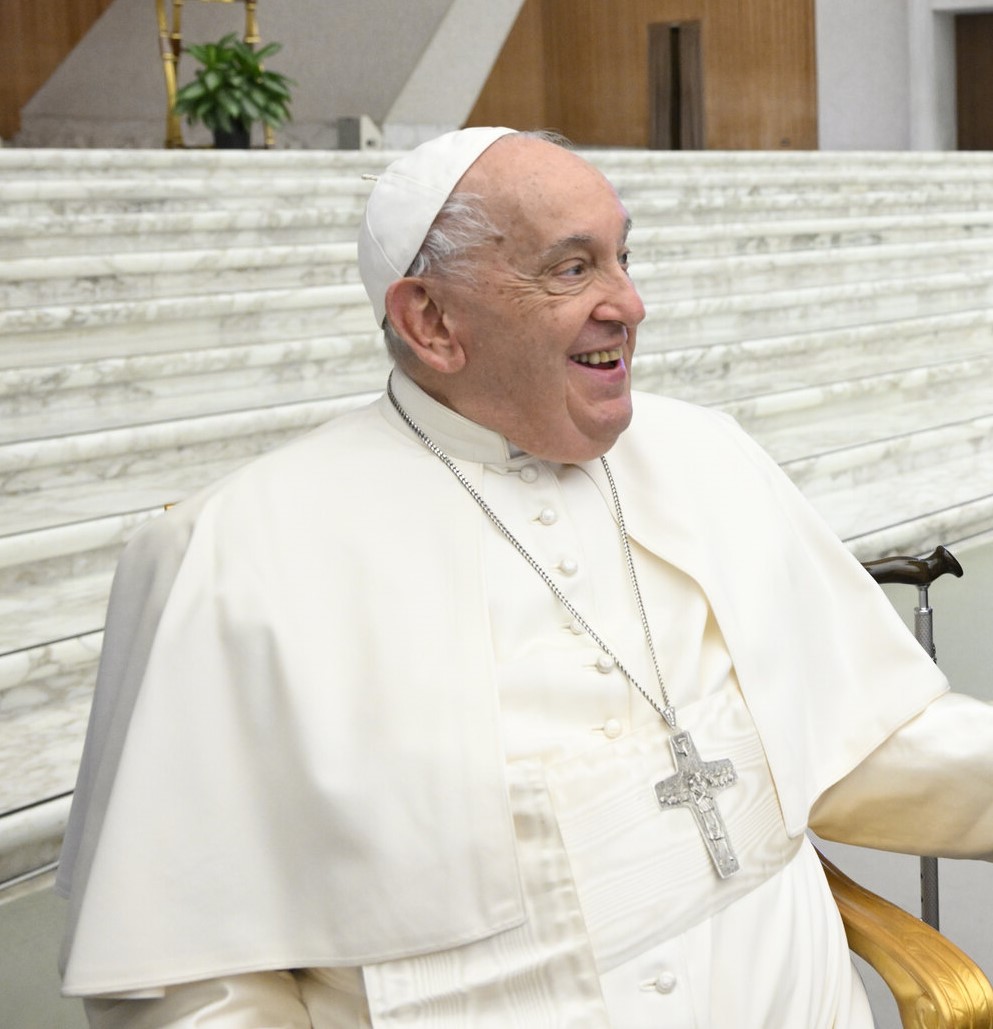
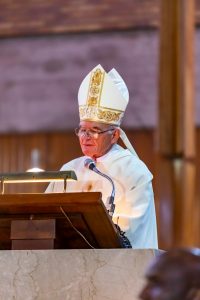
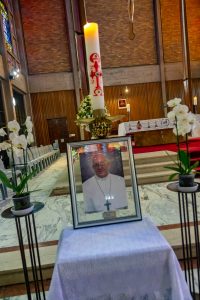
In a heartfelt homily delivered during the Memorial Mass for Pope Francis held at the Cathedral of Christ the King in Johannesburg, Cardinal Stephen Brislin offered a powerful tribute to a Pope who transcended borders, divisions, and institutions.
“Pope Francis belonged to all of us and not just the Catholic Church,” said Cardinal Brislin as he addressed people of all faiths who came to pay their last respects to Pope Francis, commonly referred to by many as the ‘People’s Pope’.
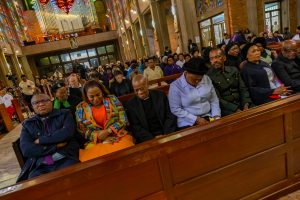
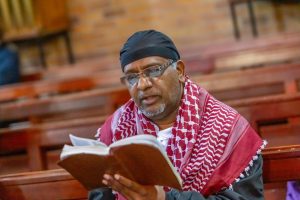
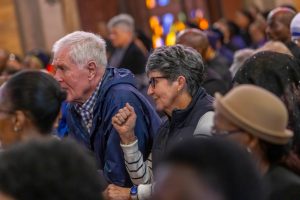
In his Wednesday, April 23 homily, Cardinal Brislin addressed a Cathedral filled with leaders from various Christian denominations, interfaith communities, civil society, and government, all gathered in a spirit of unity and remembrance. The presence of such a diverse crowd bore witness to the truth of Cardinal Brislin’s words: “Pope Francis was not merely a religious leader—he was a global voice for the voiceless.”
A Papacy Marked by Poverty, Justice, and Mercy
The Local Ordinary of the Metropolitan Archdiocese of Johannesburg reflected on the significance of Pope Francis’s chosen name, inspired by St Francis of Assisi—“the 12th-century saint, who is renowned for his life of poverty, his concern for the sick and the poor, and his sense of communion with creation.”
He drew a clear line between the saint’s legacy and the Pope’s mission: “These are indeed the characteristics of the papacy of Pope Francis.”
The 68-year-old Cardinal went on to reflect on Pope Francis’s unwavering commitment to the vulnerable, a hallmark of his papacy from the very beginning. He noted how Pope Francis consistently challenged world leaders, economic powers, and ordinary people alike to reconsider their treatment of those on the margins.
“His words were upheld by actions,” Cardinal Brislin emphasized, highlighting the Pope’s 2013 visit to Lampedusa, where he drew global attention to the suffering of migrants and refugees. The Pope’s plea to “welcome, promote, accompany and integrate” migrants, he said, became not only a cornerstone of his pontificate but also a moral compass for a world too often indifferent to human suffering.
A Church for the Margins
Cardinal Brislin, who also serves as the President of the Southern African Catholic Bishops’ Conference (SACBC), highlighted Pope Francis’s consistent call for the Church to be present among the poor, the broken, and the forgotten. “His call was to recognise the humanity of each person,” Cardinal Brislin said, underscoring the Pope’s commitment to dignity and inclusion.
He emphasized that Francis did not seek to alter Church doctrine, but rather to shape the Church into a sanctuary of compassion, mercy, and accompaniment for all—especially those on the margins.
“He never condoned sin,” he said, “but he appealed for compassion and charity.” Pope Francis’s self-awareness—his repeated reference to himself as a sinner in need of prayer—revealed a humility that resonated with many and made space for others to approach the Church with their own imperfections.
His message of mercy offered hope in a world marked by isolation and harsh judgment. “His vision was of a pilgrim Church,” he continued, “of all of us journeying together… to accompany those struggling and not leave them behind.”
A Prophet Who Was Not Without Opposition
Cardinal Brislin did not shy away from addressing the harsh criticism Pope Francis endured—often from within the Church itself. “He was probably the Pope to receive the most abuse in the modern era,” he said, noting the accusations of heresy and populism that followed Pope Francis throughout his papacy. But the Pope remained undeterred. He continued to speak clearly, compassionately, and directly—reaching hearts rather than defending ideologies.
Much of the criticism, Cardinal Brislin explained, came in response to the Pope’s push for a more synodal Church—one that listens deeply, discerns carefully, and recognizes the shared mission of all the faithful. “We are all Church together,” said Cardinal Brislin, describing the synodal model as one built on “listening to the Spirit and others, discernment, and unity.”
A Leader Rooted in Faith, Not Fame
Amid global acclaim and controversy, Pope Francis remained grounded. “He was not simply an inspired world leader… He was a person of faith,” said Cardinal Brislin. “His prayer life and communion with God were the source of his strength.” Even as his health declined, he remained unwavering in his mission—to serve God by serving people, especially the most vulnerable.
Cardinal Brislin spoke of the Pope’s anguish over war, violence, and the destruction of life. “The arrogance of nations or groups which see their power in terms of their ability to destroy… was obnoxious to him.” Equally, he championed environmental responsibility, criticizing nations for failing to act on climate change out of nationalistic self-interest.
A Legacy That Lives On
In his concluding remarks, Cardinal Brislin called on all everyone, not just Catholics—to continue the work Pope Francis began. “His deep belief and faith in God, his desire to gather people into God’s Kingdom of justice, peace and unity, and to create a world that is more merciful and caring,” he said, is what we must carry forward.
With the final prayer—“Eternal rest grant unto him, O Lord…”—the Cathedral stood not only in mourning, but in gratitude. The life of Pope Francis, shaped by service, humility, and fearless love, leaves behind a mission for the whole world to continue.
0 Comments