
As the world observes the 2025 Jubilee Year, faith leaders across South Africa have united in a bold call for debt cancellation and global financial reform.
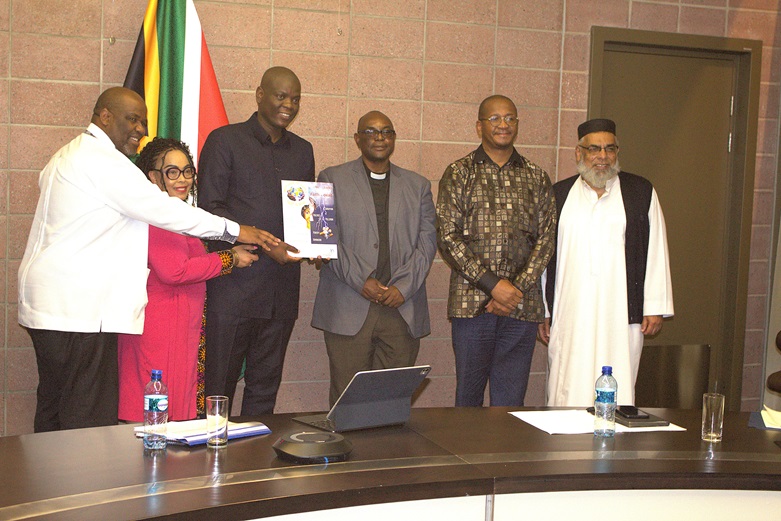
On Monday, November 3, 2025, a multi-faith delegation, led by the Southern African Catholic Bishops’ Conference (SACBC), South African Council of Churches (SACC), Lutheran Communion of Southern Africa, Fellowship of Christian Councils in Southern Africa (FOCCISA), and the United Ulama Council of South Africa, has petitioned global leaders to address the mounting debt crisis that continues to suffocate developing nations.
Faith voices rise for economic justice
The petition — handed to Minister of International Relations and Cooperation, Mr. Ronald Lamola, ahead of South Africa’s G20 presidency — calls for urgent global action to end what Church leaders describe as a moral and economic injustice. It urges the G20, G7, IMF, World Bank, and the United Nations to cancel unsustainable debts and create a transparent, rules-based framework to prevent future crises.
“Unsustainable and unjust public debts strip nations of the resources needed to invest in health, education, and climate action,” the statement reads. “Entire generations are locked into cycles of poverty and inequality. Poor countries spend more than 40% of their budgets repaying debt.”
In his Jubilee letter Spes Non Confundit (“Hope does not disappoint”), Pope Francis reminded the world that the Jubilee tradition is one of liberation, renewal, and restoration. Hope should “be granted to the billions of the poor who often lack the essentials of life,” he wrote. “If we truly wish to prepare a path to peace, we must commit ourselves to remedying the remote causes of injustice, settling unjust and unpayable debts.”
South Africa’s G20 presidency and global impact
Receiving the petition, Minister Lamola commended the faith-based initiative, noting that it aligns with South Africa’s priorities for its G20 presidency.
“We have just received the report of Jubilee from all faith-based organizations in South Africa,” said Minister Lamola in an interview with the SACBC communication office. “We will process it through as part of South Africa’s G20 presidency negotiations and the drafting of the final declaration for the summit in Johannesburg in November. The issues raised — debt relief, transformation of the global financial architecture, and sustainable development — speak directly to the challenges faced by countries of the Global South.”
During the meeting, Minister Lamola confirmed that the report would be presented to the G20 presidency and to Professor Joseph E. Stiglitz, who leads the Vatican and Columbia University Commission on Sovereign Debt — a new joint initiative formed to propose reforms for sustainable global development.
A call for liberation and new beginnings
Speaking to the SACBC communication office, after the handover, Fr. Stan Muyebe OP, Director of the SACBC Justice and Peace Commission, described the petition as a continuation of the Jubilee vision found in the Book of Leviticus.
“The Jubilee speaks about debt forgiveness and freedom for those burdened by debt,” he said. “Our petition has three demands: cancel unjust debts, ensure a permanent framework under the United Nations to prevent future debt crises, and create a financial system that prioritizes human dignity over profit.”
Meanwhile, Sr. Dominica Mkhize FSF, Associate Secretary General of the SACBC, called the moment “a critical step for the future of Africa.”
“The sins of the forefathers should not be transferred to the children,” she said. “We need a liberated Africa — one that is free to invest in its people and its future.”
A global movement rekindled
The petition echoes the spirit of the Jubilee 2000 movement, which led to historic debt relief but failed to reform the global financial system. Today, with the world facing overlapping crises of inequality, climate change, and unsustainable debt, the call for a Jubilee for the Earth is being revived.
According to the World Bank, developing countries spent a record $1.4 trillion on debt servicing in 2023 — more than many spent on healthcare or education. The UN Conference on Trade and Development (UNCTAD) reports that 3.3 billion people live in countries spending more on debt than on health, while 2.1 billion live in countries spending more on debt than on education.
The newly established Vatican-Columbia University Commission on Sovereign Debt, chaired by Nobel laureate Professor Joseph E. Stiglitz, aims to address these injustices by proposing reforms to ensure that debt no longer undermines human development or the planet’s future.
The Jubilee promise: Hope for a new economic order
As Pope Francis reminded the world, “The goods of the Earth are not destined for a privileged few but for everyone.”
For the faith leaders behind the Jubilee 2025 petition, this is not merely an economic issue — it is a moral imperative. The call to cancel unjust debts is a call to restore justice, dignity, and hope for billions.
“Debt cancellation,” said Fr. Muyebe, “is not charity — it is justice long overdue.”
0 Comments