
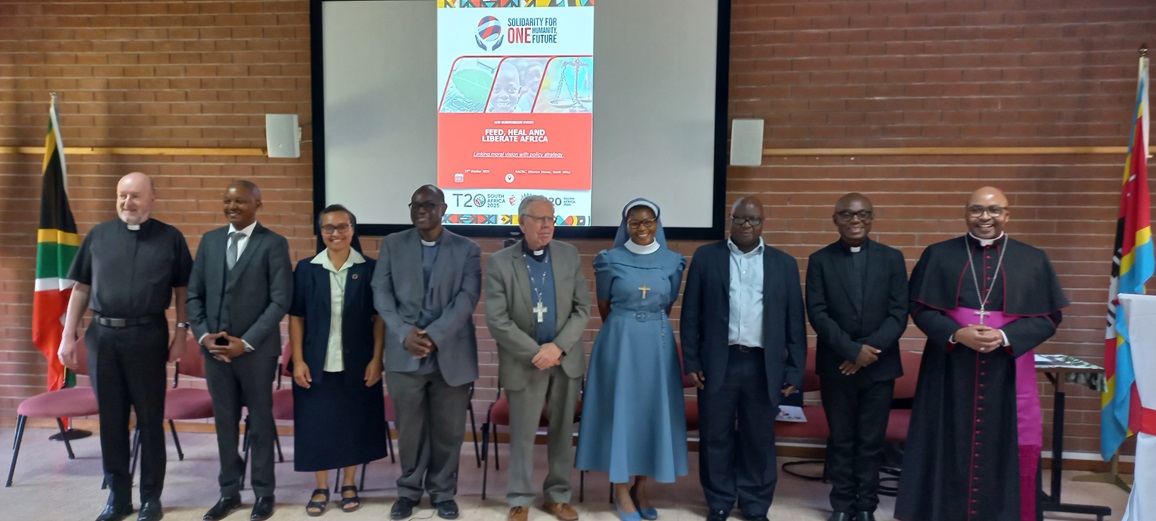
At a time when the world looks to Africa for both moral and developmental leadership, the Southern African Catholic Bishops’ Conference (SACBC), through its Justice and Peace Commission, in collaboration with Caritas Africa, Jesuits Africa, and Catholic Sisters’ Associations, presented a landmark advocacy document titled “Feed. Heal. Liberate. Africa – A Sister-led African Advocacy for Regenerative School Feeding, Women’s Health, and Debt Justice” to the South African G20 Presidency and UN Women.
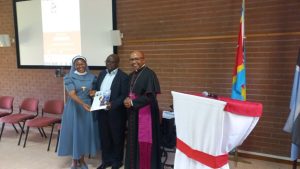
The presentation, held at Khanya House in Pretoria, gathered representatives from the South African Presidency, the United Nations, religious congregations, and civil society. The document was formally received by Dr. Lawrence Matemba, Acting Head of Policy and Research Services in the South African Presidency, on behalf of the G20 leadership.
Faith Leading the Way for a Just Global Order
Coordinated by the Faith, Food, and Health Justice Initiative (FFHJI), the advocacy document challenges the world’s most powerful economies to ensure that debt serves life, not the other way around. It envisions an economic order where “every meal shared is a seed of justice; every healed body, a sign of liberation.”
Speaking to the SACBC Communication Office following the event, Bishop Thulani Victor Mbuyisa CMM, Chairperson of the SACBC Department for Social Action, said the initiative represents “Africa’s prophetic voice being heard in global decision-making.”
“Today we placed before the G20 and UN Women a moral appeal that must not remain on the sidelines,” he said. “Issues of food, health, and debt justice must take centre stage when global leaders meet. This is about human dignity — it is about life itself.”
Faith in Action for a Just Recovery
Delivering the keynote address titled “Feed. Heal. Liberate. Africa — Faith in Action for a Just Recovery,” Bishop Mbuyisa CMM highlighted how hunger, maternal deaths, and crippling debt threaten Africa’s promise. “Our continent holds the youngest population in the world, abundant natural gifts, and deep moral wisdom rooted in faith and community,” he said. “Yet our promise is undermined by hunger, ill health, and debt.”
His message was firm and prophetic: “Too many children are hungry not because food is absent, but because justice is absent. Too many mothers die not because healing is impossible, but because health systems are underfunded. And too many nations remain indebted not because they have failed, but because the structures of the global economy are not built to serve the poor.”
Calling South Africa’s G20 Presidency “not only a diplomatic opportunity but a moral responsibility,” Bishop Mbuyisa urged world leaders to reimagine economic systems that serve life, adding: “Let every debt relief become an investment in women and children. Let every fiscal decision protect the dignity of a mother, the future of a child, and the well-being of a nation.”
Grounding his appeal in Catholic Social Teaching, he affirmed that solidarity reminds humanity of its shared destiny, the common good demands inclusive prosperity, and human dignity compels action that protects life at every stage. He also called for the formal inclusion of faith communities — especially women religious — in shaping and monitoring G20 policies, saying, “Partnership with them is not charity; it is good governance.”
Echoes from Rome: The Moral Imperative to End Hunger
These appeals echoed Pope Leo XIV’s recent address at the Food and Agriculture Organization (FAO) in Rome during World Food Day and the 80th anniversary of the organization’s founding. The Pope declared that “defeating hunger is the path to peace,” describing hunger as “a moral wound that afflicts the whole human family.”
He urged leaders to act beyond slogans: “Whoever suffers from hunger is not a stranger — he is my brother, and I must help him without delay.” Condemning food waste and the use of food as a weapon, the Pope warned that the persistence of hunger in an age of abundance is “a collective moral failure.” Paying tribute to women as “the silent architects of survival,” he called their empowerment “a guarantee of a more humane and lasting food system.”
Faith in Action: Church and Sisters United
The initiative’s driving force comes jointly from the Faith, Food and Health Justice Initiative, the Justice and Peace Commission, and women religious serving across the SACBC region. Together, they form a faith-based network that connects advocacy with lived experience in schools, clinics, and parishes.
Sr. Dr. Macdelyn Mosalagae SC, one of the campaign’s leading voices, described it as both a spiritual and social mission: “We are no longer just women of the veil. We are healers, educators, and farmers. We reach out to the realities of hunger and poverty, and we want the G20 to know — they will see more of us.”
She affirmed that Catholic Sisters embody the campaign’s vision: “We feed to heal, we heal to liberate — because when debt serves life, justice is done.”
A Cry for Justice and Radical Change
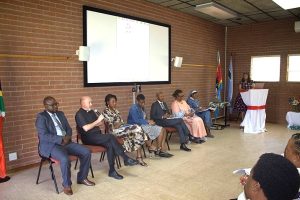
During a panel discussion moderated by SACBC Communication Officer Sheila Pires, Caritas Africa’s Wesley Chibamba made a passionate appeal for courageous global leadership: “It has been done before — debt can be canceled again. We need an economic reset where no one goes to bed hungry, where women are treated equally, and where economies serve humanity, not markets.”
His message was echoed by Victoria Mutambaa of the Jesuit Refugee Service, who highlighted the need to include refugees, migrants, and undocumented children in social protection and school feeding programmes: “If inclusion is not at the heart of our systems, then justice is only half done.”
Concluding his reflection, Bishop Mbuyisa CMM summed up the heart of the campaign:
“This is not just an advocacy moment — it is a faith moment. Africa is rising to remind the world that justice begins at the table, where every child is fed, every woman healed, and every nation liberated.”
0 Comments