
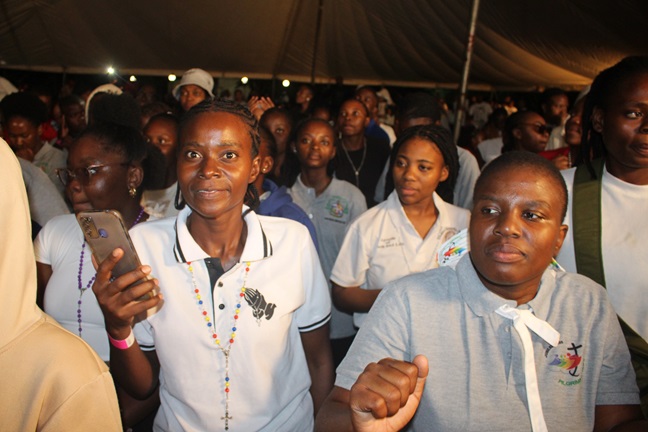
Speaking on the sidelines of the second plenary assembly of the Southern African Catholic Bishops’ Conference (SACBC), Bishop Siphiwo Paul Vanqa SAC delivered a heartfelt appeal to the Church to prioritize youth accompaniment in the face of serious socio-economic and spiritual challenges.
The Bishop of Queenstown, who also serves as the SACBC Liaison Bishop for Youth, emphasized that young people are not only the future but the “now” of the Church. “Our youth need our accompaniment,” he said. “They are facing unemployment, gender-based violence, and human trafficking. These situations often suppress them even when they try to stand up.”
In his reflections, Bishop Vanqa encouraged pastoral agents, parents, and the broader Catholic community to support youth by giving them hope and opportunities for meaningful engagement in Church and society. He referred to the recent Jubilee for Young People in Rome, expressing his hope that the encounters and solidarity among young Catholics will reignite their energy and commitment.
Addressing the formation of school-aged youth, Bishop Vanqa raised concern over government policies such as weekend schooling, particularly in South Africa, which prevent children from attending catechism and Sunday Mass. He described this as a painful reality that disconnects young people from God, as education systems focus solely on academic success at the cost of spiritual formation.
“Our children are being deprived of their humanity and divinity,” he warned, highlighting the fact that even in some Catholic schools, basic practices of prayer and spirituality have been lost.
In response to these challenges, Bishop Vanqa cited initiatives in his own Diocese of Queenstown where catechism is offered on Fridays after school, rather than waiting for weekends. He also advocated for more active parental involvement in faith formation, stating that parents preparing their children for baptism or confirmation should be part of the catechetical process.
“The Church must act,” he concluded. “Even if on a small scale, we must begin.”
0 Comments