
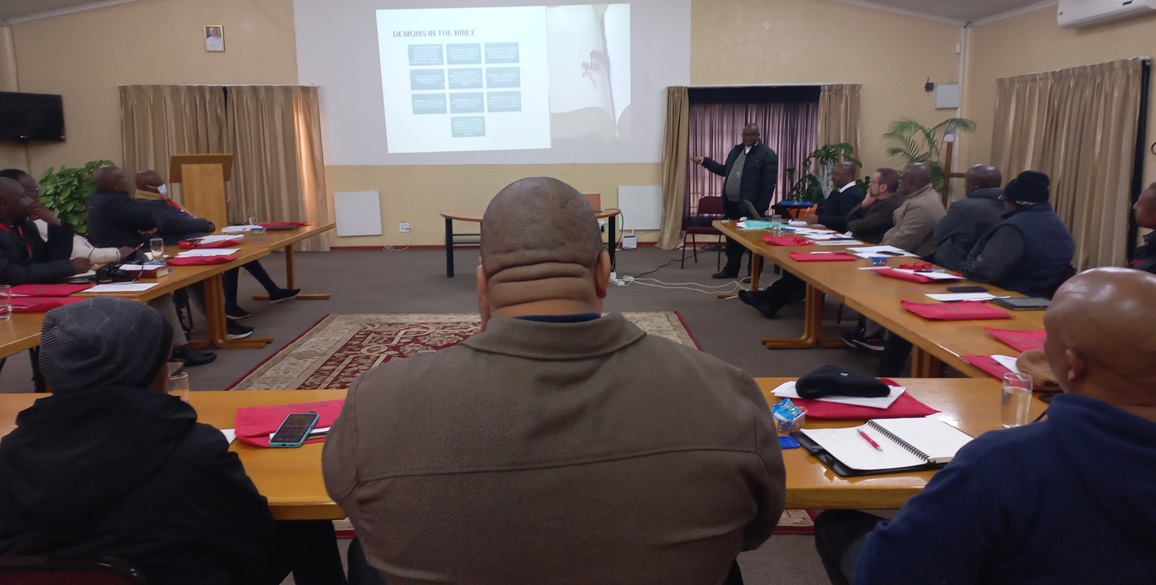
Southern African exorcists gathered for prayer, discernment and formation at their annual general meeting in Lumko, 16 appointed exorcists including diocesan representatives from South Africa, Botswana, and Lesotho reflected on mental health, cultural awareness, the sacraments, and the Ministry of Angels.
The Ministry of Exorcism
The ministry of exorcism must always be rooted in discernment, sound formation, and the ordinary life of faith, Bishop Massilo John Selemela told participants at the Southern African Catholic Bishops Conference Annual General Meeting AGM for exorcists.
Sixteen exorcists and diocesan representatives from South Africa, Botswana, and Lesotho took part in the AGM held from 25 to 28 August. The program combined prayer, Eucharistic celebration, and adoration with formation on psychological and psychiatric illness, the angelic powers in the ministry of exorcism shared reflection and planning for the year ahead.
Careful Discernment and Compassionate Accompaniment
On Thursday, 27 August, Bishop Selemela, the chairperson of the SACBC Department for Formation, Life and Ministry of the Clergy, led a session on demonology and the ministry of angels.
In an interview with the SACBC communication office, Bishop Selemela said that exorcists need to understand both the reality of spiritual evil and the concrete circumstances of the people they accompany. It is an area which is to an extent very complicated, he said, noting that priests must be attentive to the cultural, social and psychological contexts in which people seek help.
The Auxiliary Bishop of Pretoria Archdiocese stressed that mental, emotional, and psychological disorders should not be hastily interpreted as signs of diabolic possession. Some people may be experiencing a genuine mental health crisis and need the care of qualified professionals, he explained.
The program’s session on psychological and psychiatric illness, led by Dr. Michelle Daniels, reflected that same concern: The church’s pastoral response requires careful discernment as well as prayer.
Understanding Culture, Protecting the Young
In the 27 August interview, Bishop Selemela also underscored the need for cultural sensitivity, particularly in a region where ancestral practices and rituals form part of many people’s lived experience. An exorcist, he said, should know the history, language, and cultural dynamics of the people he serves while remaining attentive to the ways fear, deception, or harmful practices can wound a person’s spiritual life.
He pointed especially to the vulnerabilities facing young people, including substance abuse, economic hardship, and the attraction of practices that promise knowledge, power, or a better future. Such situations, he said, require pastoral accompaniment that brings people back to faith, prayer, life ordered toward God.
The Eucharist and the Sacrament of Reconciliation and Penance
At the heart of that response are the sacraments. Bishop Selemela described regular prayer, Sunday Mass, Holy Communion and the Sacrament of Reconciliation and Penance as the Church’s ordinary and powerful means of resisting evil.
Communion is actually a very powerful prayer, he said. because it is an encounter with Christ himself. Regular confession, he added, helps believers to face a sin honestly and to grow in spiritual freedom.
His words resonate with the late Bishop Edward Gabriel Risi OMI, who explained that exorcism is among the church’s most misunderstood ministries. In an interview with the SACBC communication office, the late Bishop Risi emphasized that solemn exorcism is rare and should be considered only after a careful process of discernment, including medical and psychological assessment. More often, he said, the Church accompanies people through prayer, conversion, confession, and regular participation in the Eucharist.
Angels and Saints, God’s protection
For Bishop Selemela, the ministry also includes confidence in God’s protection through the angels and the communion of saints. He encouraged the faithful, especially young people, to cultivate a relationship with their guardian angels and to seek the intercession of Saint Michael the Archangel.
“It is very important that the people of God, and especially the young people, are encouraged to have a relationship with their guardian angels,” he said.
Bishop Selemela expressed concern about what he described as a growing culture of satanic cults in some schools, where young people can be pressured into pacts and practices that distance them from faith and spiritual freedom. He said that early formation in prayer and in devotion to the angels and saints can help young people resist such pressures.
0 Comments