
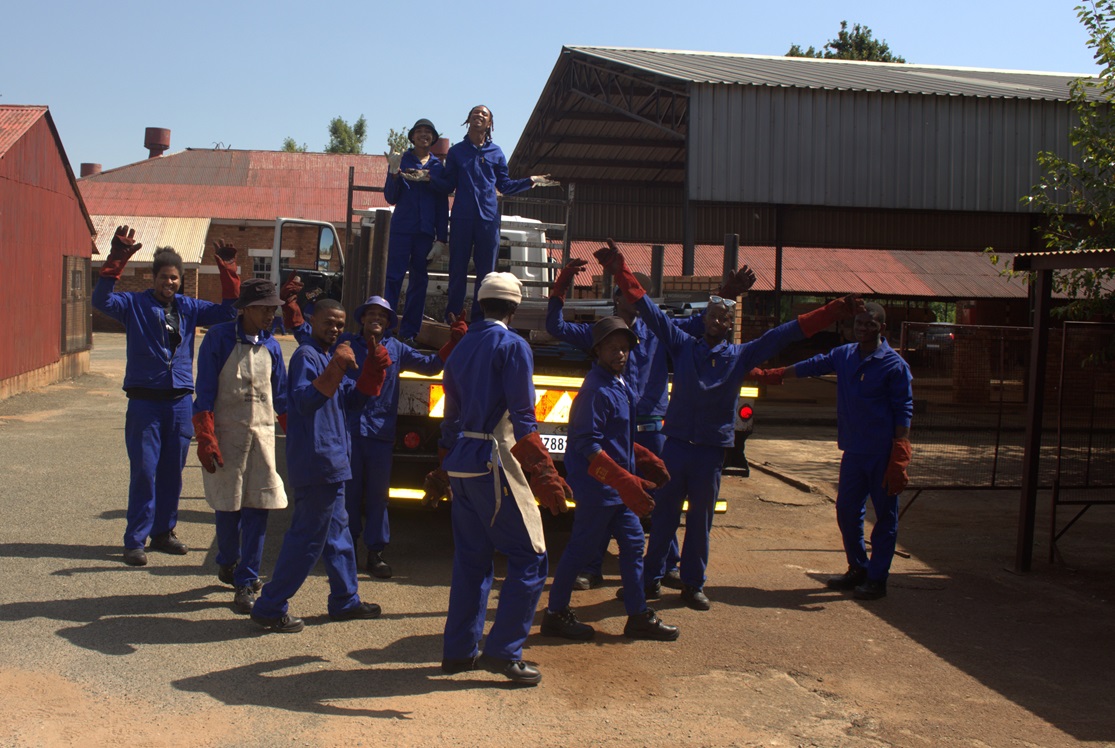
In South Africa, where almost half of young people aged 15 to 34 are unemployed, learning a practical skill can mean the difference between dependency and dignity, despair and hope.
On 15 July, the international community marks World Youth Skills Day, observed globally this year under the theme “Skills for a Shared Future.” The day highlights the importance of equipping young people with the technical, entrepreneurial, digital and human skills needed to build inclusive societies and sustainable economies.
For the Catholic Church in Southern Africa, this is not a new mission. For decades, Catholic schools, training centres and development programmes have invested in education as a way of restoring hope. One example is the Catholic Institute of Education (CIE) Thabiso Skills Institute which has transformed the lives of thousands of unemployed young South Africans by helping them acquire practical skills and create livelihoods.
This year, the institute is celebrating another milestone in its partnership with Absa Bank, whose support has expanded occupational skills training and entrepreneurship programmes for young people.
According to Statistics South Africa’s Quarterly Labour Force Survey (Q1 2025), young people between the ages of 15 and 34 account for just over half of the country’s working-age population—around 20.9 million people. Yet the official unemployment rate among this group stands at 46.1%, having increased steadily over the past decade. Young people aged 15 to 24 continue to face the greatest barriers to entering the labour market.
Against this backdrop, vocational education has become more than an alternative to university. It has become a lifeline. “We became aware that there were many adult education and skills centres operating on Catholic-owned properties throughout South Africa,” explained Nathan Johnstone, who oversees the work of the CIE Thabiso Skills Institute.
The Catholic Institute of Education itself was established by the Southern African Catholic Bishops’ Conference (SACBC) in 1985 to support Catholic education. While its early work focused primarily on schools, the organisation gradually recognised the growing need to accompany young people who had left the formal education system.
In 2010, the Thabiso Skills Institute was established to coordinate Catholic skills centres across the country. Today, the institute supports 29 skills centres operating in seven provinces, providing occupational training to approximately 5,000 young people every year. Most participants are unemployed. Many never completed secondary school.
“The economy of South Africa is not growing, unemployment is rising and opportunities for young people to find employment are extremely limited,” Johnstone said.
Recognising these realities, the institute has increasingly focused on preparing young people not only for formal employment but also for the informal economy and entrepreneurship.
“The real impact of our work is when young people become economically active.”
Beyond training
The Church’s approach extends far beyond teaching technical skills.
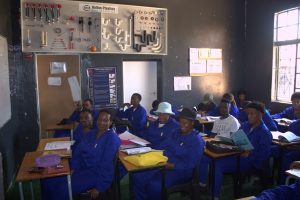
Training in construction, cellphone repair, beauty therapy, manufacturing, information technology and other trades is accompanied by life skills formation, entrepreneurship training, mentoring and workplace experience.
Johnstone believes this ongoing accompaniment is what truly changes lives. “Training is only the start of the journey,” he said. “What young people really need are people who listen to their stories, coach them, mentor them and help connect them with organisations that can support their businesses.”
That accompaniment reflects the Church’s broader understanding of integral human development—forming not only skilled workers but confident, resilient and responsible citizens capable of contributing to their communities.
Lives transformed
The impact is perhaps best seen in the lives of graduates. Patricia Mahlangu, founder of a herbal trading company, credits the institute with helping transform a small business into an expanding enterprise rooted in traditional African herbal care products.
“The training helped me build my business,” she said.
With business support received through the programme, she has diversified her product range and is now developing soaps, massage oils and other products while pursuing additional training.
Perhaps most importantly, she has gained the confidence to pursue partnerships with pharmacies and larger retail outlets.
“It opened my mind to do more,” she explained. “Now I’m able to explore.”
Another graduate, says the programme strengthened her entrepreneurial journey and improved her marketing skills, enabling her business to reach new customers through social media and additional sales promoters.
For Luyolo Tumelo Manzi, the programme offered a second chance after struggling within the traditional school system. Introduced to the skills programme through his aunt, he chose cellphone repair among several available trades.
Following graduation, he helped establish a student business before eventually launching his own company, Mobile Experts. “I didn’t give up,” he recalled. “I decided to continue using the skill fully to my advantage.”
Today, he runs his own repair business, demonstrating how vocational education can restore confidence and create livelihoods where conventional educational pathways have failed.

A shared responsibility
The institute’s work is sustained through partnerships with philanthropic organisations and the private sector. Among its current supporters is Absa Bank, which has funded occupational skills training, workplace learning stipends, entrepreneurship programmes and livelihood hubs for several consecutive years.
For Madoda Hlongwane, Head of Applied Measurement for Absa’s Corporate Citizenship division, the partnership reflects a recognition that addressing youth unemployment requires collaboration across society.
“We want to bridge the gap,” he said. Government alone, he noted, cannot solve South Africa’s unemployment crisis, nor can businesses acting independently. Instead, partnerships with organisations deeply rooted in local communities are essential because they understand the realities young people face and are well positioned to identify practical solutions.
“Together we can support and empower young people so they can participate meaningfully in the economy.”
A mission rooted in the Gospel
As the Southern African Catholic Bishops’ Conference marks 75 years since the establishment of the Catholic hierarchy in Southern Africa, the work of the Thabiso Skills Institute illustrates how the Church continues one of its oldest missions: education.
The theme of this year’s World Youth Skills Day—’Skills for a Shared Future’—calls for preparing young people not only with technical competencies but also with digital, entrepreneurial, social and civic skills needed to navigate a rapidly changing world shaped by artificial intelligence, environmental challenges and evolving labour markets.
For the Church, this vision resonates deeply with its commitment to integral human development. The work of the CIE Thabiso Skills Institute demonstrates that skills are about far more than employment. They are about restoring dignity, strengthening communities and allowing young people to become active builders of a more just and shared future.
0 Comments