
“We cannot remain silent and simply watch what is happening in people’s lives.”
With those words, Bishop Joseph Mary Kizito opened a dialogue that reflected the Catholic Church’s growing pastoral response to one of South Africa’s most pressing humanitarian challenges: the plight of undocumented migrants, refugees and asylum seekers amid continuing anti-migrant protests.
On Thursday, 9 July, the Southern African Catholic Bishops’ Conference (SACBC) Office for Migrants, Refugees and Human Trafficking gathered diocesan coordinators from across South Africa to assess the Church’s response before, during and after the nationwide anti-migrant demonstrations of 30 June.
Representatives from dioceses across South Africa shared reports from the ground, highlighting both the suffering of displaced families and the quiet yet determined work of parishes, religious congregations and Catholic organisations accompanying those affected.
“The Church cannot remain silent,” Bishop Kizito told participants. “We must respond to those who knock on our doors. Like Jesus, we respond through our words, our actions, and our collaboration with others.”
A Church preparing before the crisis
Long before the 30 June demonstrations, the Church had already begun preparing for the growing tensions.
In May, the SACBC Office for Migrants, Refugees and Human Trafficking convened an online regional meeting with the Inter-Regional Meeting of the Bishops of Southern Africa (IMBISA), bringing together Church leaders and representatives of civil society organisations from across Southern Africa to reflect on the anticipated protests and their possible humanitarian consequences. The SACBC also issued public appeals urging respect for the dignity of every human person while encouraging dioceses to strengthen collaboration with civil society, humanitarian organisations and local authorities.
Fear on the streets, hope in local communities
Although many dioceses reported that the demonstrations passed peacefully, fear spread quickly among migrant communities.
Businesses closed their doors, families remained indoors, and many undocumented migrants sought refuge in churches or with neighbours. In one diocese, a religious sister recalled that asylum-seeking families pleaded with her to keep the mission gates open should violence erupt.
“They told me, Sister, if anything happens, please leave the gates open so that we can run here for shelter.” She later accompanied migrants struggling with expired documentation and assisted families seeking protection following police operations.
Another diocesan coordinator reported that many local communities resisted hostility.
“Our migrants have become part of our communities. Many South Africans protected them because they recognise the contribution they make to local businesses and employment.”
Accompanying the displaced
For other dioceses, however, the protests quickly developed into a humanitarian emergency.
In one coastal city, hundreds of migrants gathered outside their country’s consulate seeking assistance before being transferred to temporary processing facilities.
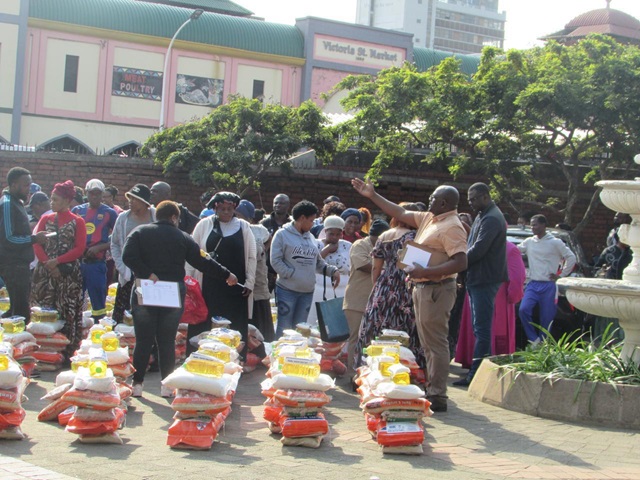
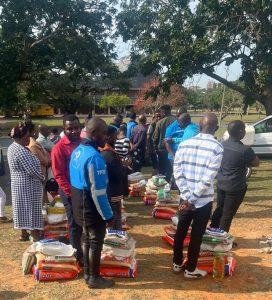
Working alongside churches of different Christian denominations, humanitarian organisations and local communities, Caritas coordinated emergency relief, distributing hygiene kits, baby supplies, food and other essential items.
One Caritas coordinator explained that what began as emergency relief has evolved into a much broader humanitarian challenge, with many displaced families still requiring long-term accompaniment beyond immediate assistance.
Elsewhere, a diocesan refugee pastoral team is assisting hundreds of displaced migrants who remain outside a Refugee Reception Centre after being forced from surrounding communities.
The coordinator described the difficult conditions facing more than 350 people, including many children.
“They are sleeping on pavements without adequate sanitation and depend entirely on cooked food brought by people of goodwill.”
Rather than establishing permanent temporary camps, the local Church is working with humanitarian organisations and local partners to help families safely reintegrate into communities where possible.
Musina at the heart of the humanitarian response
One of the most moving testimonies came from a missionary sister serving at a shelter for vulnerable women and children in Musina, near South Africa’s border with Zimbabwe.
Speaking from the repatriation centre itself, she described an unprecedented humanitarian operation.
“On the first night, there were literally thousands of people. Nobody had expected such an influx,” she said.
She estimated that more than 20,000 migrants initially passed through the temporary facilities before buses began transporting people to neighbouring countries. By the time of the meeting, approximately 1,000 people remained awaiting transportation.
Working alongside the Department of Home Affairs, the International Organisation for Migration (IOM) and charitable organisations, Church volunteers continue providing food, pastoral care and practical assistance.
She stressed that significant needs remain.
“There is great suffering, especially where families have been separated. Many people are frightened and uncertain about the future.”
Among the most urgent needs, she identified infant food, hygiene products, towels, and pastoral accompaniment.
“Our role is also to be present — to listen to comfort and to walk with people who have lost almost everything.”
Continuing to accompany
The meeting took place as organisers of the 30 June demonstrations announced that weekly anti-migrant protests would continue in several parts of South Africa.
While acknowledging legitimate concerns surrounding irregular migration, Church representatives repeatedly emphasised that every response must respect the dignity and rights of every human person.
Participants also expressed concern that refugees, asylum seekers and documented migrants are increasingly being affected alongside undocumented migrants, while some South Africans have themselves become victims after being mistakenly identified as foreigners.
Closing the meeting, Bishop Kizito reminded participants that the Church’s mission would not end with the immediate crisis.
“This is not simply an event,” he said. “It is a process that will continue. There will be many consequences, and we must continue responding with compassion, collaboration, and hope.”
Bishop Kizito also confirmed that the reports from dioceses will be presented to the SACBC bishops during their August Plenary Assembly as the Conference continues discerning its pastoral response.
0 Comments