
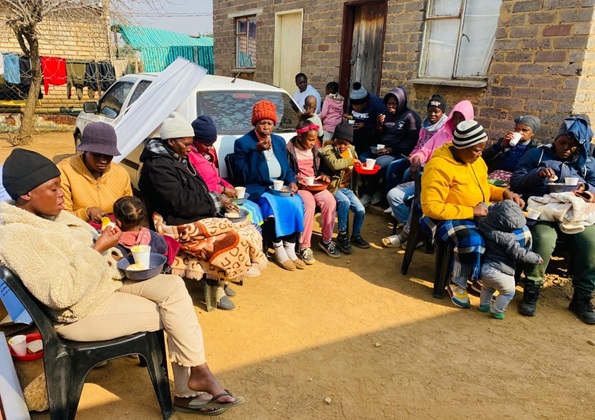
As South Africa prepares for a future with reduced international support for HIV and tuberculosis (TB) programmes, health advocates are calling for a careful and compassionate transition that safeguards the country’s most vulnerable communities.
According to the Catholic Health Care Association of Southern Africa (CATHCA), recent reports indicate that funding from the Global Fund, which has played a significant role in supporting South Africa’s HIV and TB response, is expected to decline in the coming years. At the same time, reductions in United States global health funding have already disrupted some HIV programmes, research initiatives and prevention services.
While South Africa has made remarkable progress in combating HIV and TB through a combination of public investment, international partnerships and community-based initiatives, concerns are growing about the impact that shrinking resources could have on those most at risk.
Particular attention is being drawn to people living in informal settlements, rural communities, mining and farming areas, as well as migrants, young women, children, people with disabilities and those living with HIV, TB or mental health challenges. Many of these individuals rely not only on clinics but also on community outreach programmes and trusted local support networks to access healthcare.
CATHCA has emphasized that the challenge facing the country is not simply financial but concerns how the transition to greater domestic responsibility will be managed.
Community-based and faith-based organisations continue to play a vital role in reaching people who may struggle to access healthcare because of poverty, distance, stigma or social exclusion. These organisations often provide counselling, treatment support, education and accompaniment, helping individuals remain connected to essential services.
Health advocates warn that public clinics, many of which already operate under significant pressure, cannot automatically absorb additional responsibilities without adequate planning, staffing and resources. They stress that trust remains a critical element of successful healthcare delivery, particularly for vulnerable populations.
To ensure that progress made in the fight against HIV and TB is not lost, experts are calling for a transition plan that identifies communities most at risk, strengthens healthcare services and supports collaboration between government, healthcare providers, civil society organisations and faith communities.
For Catholic health networks, the issue is closely linked to the Church’s commitment to human dignity and the preferential care of the poor and marginalized. Ensuring continued access to healthcare for those most vulnerable, they argue, is not only a public health priority but also a moral responsibility.
As South Africa moves toward greater self-reliance in financing its HIV and TB response, advocates insist that the measure of success will not be found only in budgets and policies, but in whether the needs of those who are hardest to reach continue to be met.
At a time of declining funding, they say, protecting vulnerable communities must remain at the centre of the country’s healthcare response.
0 Comments