
Article by Sr Neide Lamperti, MSCS: SACBC Migrants, Refugees and Human Trafficking Office
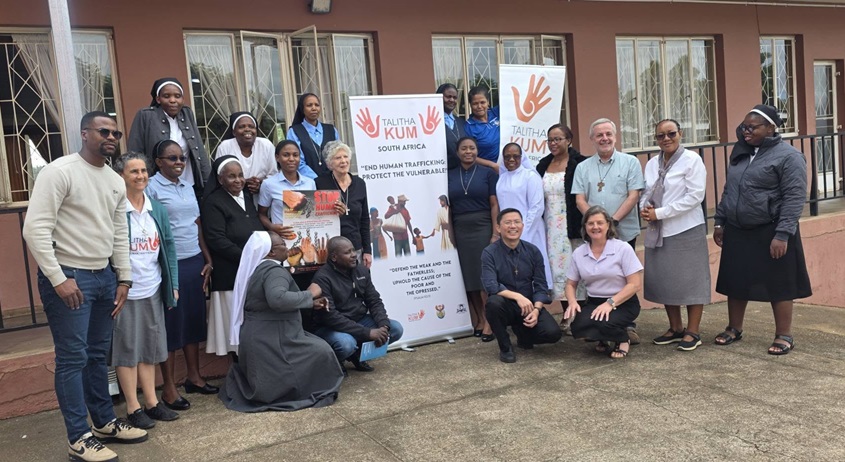
From 9 to 13 March 2026, a delegation from the Southern African Catholic Bishops’ Conference (SACBC) visited the Diocese of Manzini in Eswatini to conduct a formation program focused on human mobility, pastoral care for migrants and refugees, and the prevention of human trafficking. The mission took place at the Catholic Centre in Manzini and was led by Sr Neide Lamperti MSCS, coordinator of the Migrants, Refugees and Human Trafficking Office, Fr Nguyen Dung Luc, Sr Jane Frances Mohala, and Charles Ephraim Luhanga. Over several days, the team engaged with Church leaders, religious communities, civil society partners, students, and refugee representatives, strengthening collaboration in responding to migration and human trafficking in the region.
The program began with a conference bringing together leaders and organizations to reflect on the reality of migration today. In her opening remarks, Sr Neide Lamperti emphasized that migrants and refugees are not statistics or problems, but people with stories, dignity, and hopes. Inspired by the teachings of Pope Francis, participants were reminded of the Church’s call to “welcome, protect, promote and integrate” migrants and refugees. The meeting highlighted that defending human dignity in the context of migration is both a pastoral responsibility and a Gospel imperative, calling the Church to accompany those who are forced to move and to promote solidarity within communities.
During the conference, Fr Nguyen Dung Luc presented a reflection on the Church’s mission in pastoral care for migrants and refugees, recalling the biblical foundations of welcoming the stranger and emphasizing that migrants must always remain at the centre of pastoral action. The program also included a presentation by lawyer Meluzi Matsingwa, who explained the legal framework protecting migrants, refugees, and asylum seekers in Eswatini. His presentation highlighted both the human rights protections available and the challenges faced by mobile populations, including undocumented migration, labour exploitation, discrimination, and limited access to services.
Another key moment of the formation focused on the prevention of human trafficking, led by Charles Ephraim Luhanga and Sr Jane Frances Mohala. They explained how trafficking networks operate, the difference between human trafficking and migrant smuggling, and the various forms of exploitation affecting vulnerable people. Participants were encouraged to recognize warning signs of trafficking and to strengthen prevention efforts through awareness, especially among young people, communities, and Church groups. The discussion also highlighted the importance of collaboration between civil society, faith-based networks, and public institutions in protecting victims and preventing this crime.
The second day included a meeting with members of religious life and lay collaborators. The gathering began with Mass at Little Flower Church and continued with reflections led by José Luiz Ponce de León, Bishop of the Diocese of Manzini. The Bishop expressed appreciation for the strong collaboration between the Church and government authorities in addressing human trafficking in Eswatini. He also encouraged continued coordination through Caritas and welcomed the growing involvement of the Talitha Kum network, which supports global efforts to prevent human trafficking and protect victims.
During the visit, the SACBC team also participated in a radio interview with Radio Veritas, sharing reflections on the Church’s commitment to migrants, refugees, and the prevention of human trafficking. The program will be broadcast on 14 March and aims to raise awareness among a wider audience about these important issues.
The mission also included visits to local schools to engage young people in conversations about human trafficking prevention. At Mpaka High School, around 600 students participated in awareness sessions, while approximately 110 students attended the program at Malindza Central Primary School. Despite rainy weather, the meetings offered meaningful opportunities to discuss the risks of trafficking, how it occurs, and how young people can protect themselves and others.
The delegation also visited the Malindza Refugee Reception Centre, where they met with the centre’s management and learned about the situation of refugees currently living there. The centre hosts around 850 refugees from more than ten different nationalities, including people from the Democratic Republic of Congo, Burundi, Rwanda, Somalia, Ethiopia, and Zimbabwe. The visit provided an opportunity to listen to the realities faced by displaced people and to reaffirm the Church’s commitment to defending human dignity and accompanying those forced to leave their homes.
The activities in the Diocese of Manzini represented an important step in strengthening collaboration between Church institutions, civil society, and local communities. Through formation, dialogue, and pastoral outreach, the Southern African Catholic Bishops’ Conference continues to build networks that promote the protection of migrants, refugees, and victims of human trafficking, while fostering communities of solidarity, justice, and hope across the region.
0 Comments