
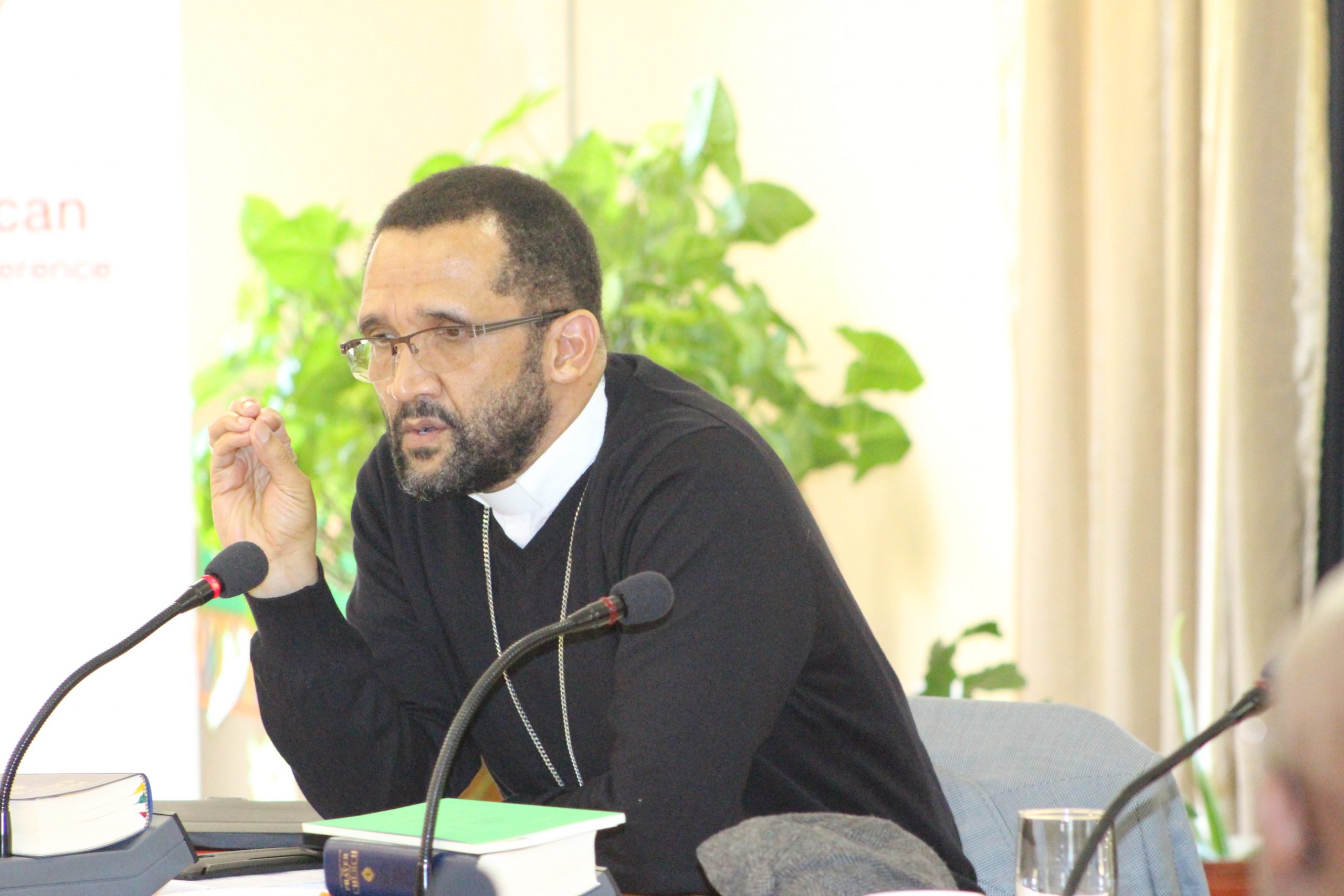
Bishop Sithembele Anton Sipuka, President of the South African Council of Churches (SACC), addressed fellow church leaders at the National Church Leaders Anti-Corruption Conference in Johannesburg with a call for both moral clarity and practical commitment in the national response to corruption.
Recently appointed by Pope Leo XIV to the Vatican’s Dicastery for Interreligious Dialogue, Bishop Sipuka is also the first Catholic to lead the SACC. In his opening address, he reflected on the spiritual and social consequences of corruption, emphasizing the Church’s responsibility to both speak out and act.
“We gather today not as spectators of corruption,” he said, “but as participants in God’s mission to establish justice and righteousness in our country.”
Corruption as a Violation of Human Dignity
Referencing recent revelations, including allegations of high-level police collusion with crime syndicates, Bishop Sipuka described corruption as a betrayal of the common good and a direct attack on the dignity of the poor.
“Every rand stolen is a clinic not built, a child unfed, a community left in darkness,” he said, stressing that corruption must be understood as more than financial misconduct—it is also a moral and spiritual crisis.
He warned that corruption undermines Ubuntu, replacing solidarity with self-interest and weakening trust in public institutions.
Reflecting on the Church’s Own Integrity
Bishop Sipuka acknowledged that the Church must also confront its internal challenges.
“We cannot preach justice if we are not accountable ourselves,” he said. “The Church, too, must model transparency and humility. We are not immune.”
He spoke against forms of spiritual manipulation, clericalism, and prosperity teachings that distort the Gospel and divert attention from the needs of the vulnerable.
A Fivefold Mission for the Church
Bishop Sipuka outlined five key areas in which the Church must actively engage to address the scourge of corruption. He stressed the importance of modelling ethical leadership and ensuring transparency within Church structures. He also urged Church leaders to speak prophetically with consistency and courage, even when doing so is unpopular or uncomfortable. Protecting and supporting whistleblowers and victims of corruption was highlighted as a moral imperative, alongside the need to promote civic education and moral formation rooted in Gospel values. Finally, he called on the Church to collaborate meaningfully with broader society, including civil organisations and public institutions, in building a culture of ethical governance.
Reclaiming Hope and Responsibility
In his opening remarks, Bishop Sipuka concluded with a call for renewed engagement from people of faith in rebuilding society.
“Our role is not to replace the state, but to remind it of its responsibility. The Church must walk with the people, not above them. The poor cannot be left to suffer while we remain silent.”
He encouraged Church leaders to remain grounded in Scripture, confident in conscience, and committed to action.
“South Africa’s democratic dream may be under strain, but it is not lost. Our faith calls us to keep working—for justice, for dignity, and for the common good.”
SACC Commitment and Public Statement
Meanwhile, at the conclusion of the two days ‘National Church Leaders Anti-Corruption Conference’, the SACC released a formal statement titled ‘The Church’s Call to Conscience: Leading the Prophetic Voice on Corruption in South Africa’, affirming the Church’s commitment to fostering ethical leadership and rebuilding public trust.
The SACC statement highlights key priorities for action, including strengthening transparency in church governance, promoting civic responsibility, establishing a Church Leaders’ Covenant Against Corruption, and supporting civil society initiatives that hold public institutions accountable.
The SACC also expressed support for impartial investigations into recent allegations involving law enforcement and called for urgent action by national authorities.
0 Comments